How to Turn Real-Time Expense Data Into Decisions You Can Trust
Table of Contents
In partnership with ExpenseIn
A live dashboard feels like progress. The numbers update throughout the day, the charts move, and finance finally has something that looks like visibility.
But a dashboard isn’t the same thing as visibility. If the team still reaches month-end with missing information, unresolved approvals and spend nobody flagged in time, the fact that the numbers were “real-time” hasn’t actually changed anything.
This is the trap many expense tools fall into. “Real-time” became a selling point long before finance teams stopped to ask a more important question: does seeing the data sooner actually change the decisions we make?
A number updating every hour instead of every month is only progress if someone acts differently because of it. Otherwise, it’s simply the same month-end surprises delivered with better graphics.
The reality is that finance doesn’t need more dashboards. It needs more confidence. Confidence that the information is complete, confidence that the numbers are reliable, and confidence that the right issues are being surfaced before they become month-end problems.
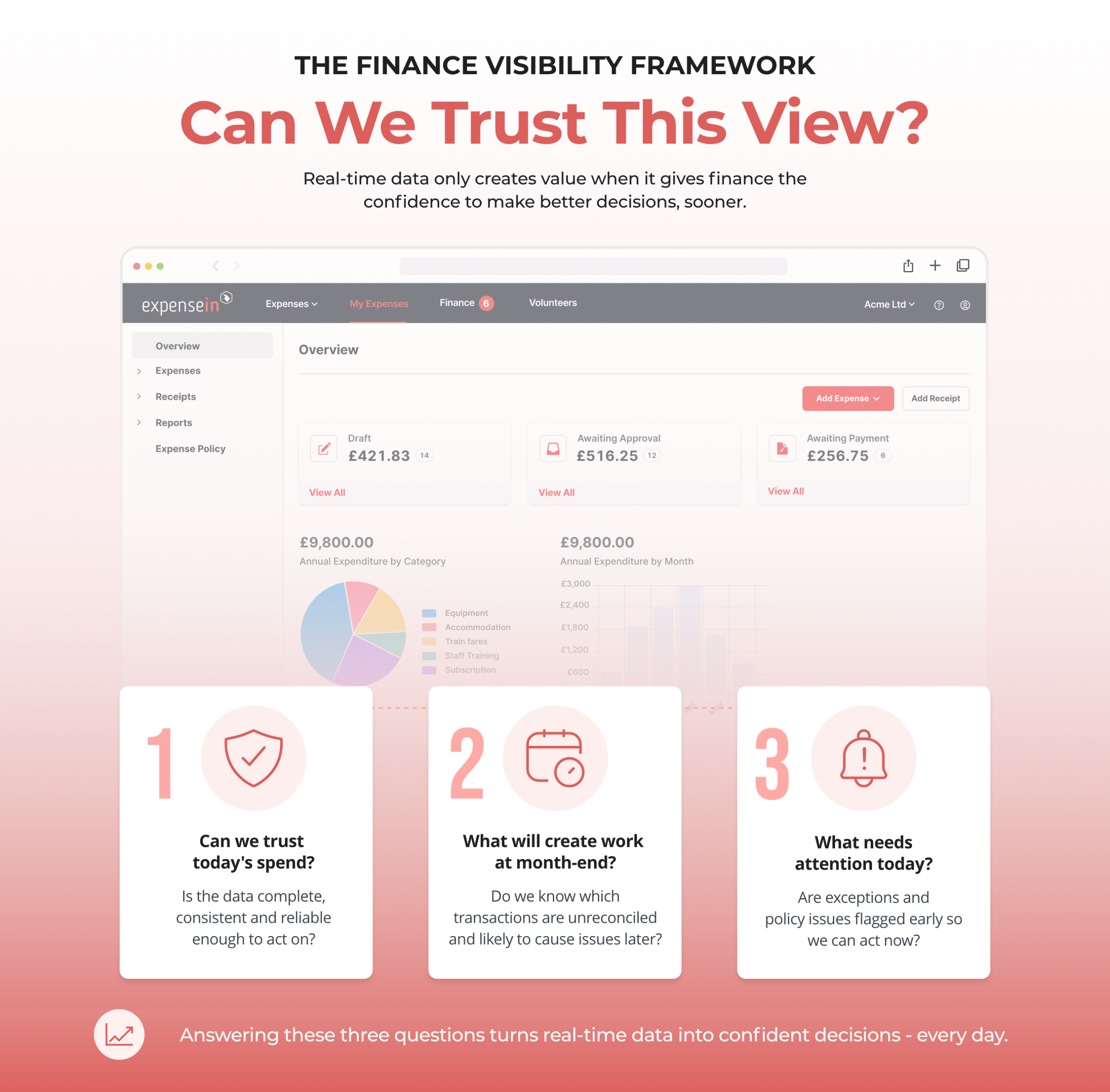
One of the simplest ways to judge whether your expense reporting is genuinely helping finance is to ask three questions. They apply whether you’re reviewing your existing processes or evaluating a new platform.
- Can we trust the current view of spend?
- What’s likely to create more work at close?
- Is there anything that needs attention right now?
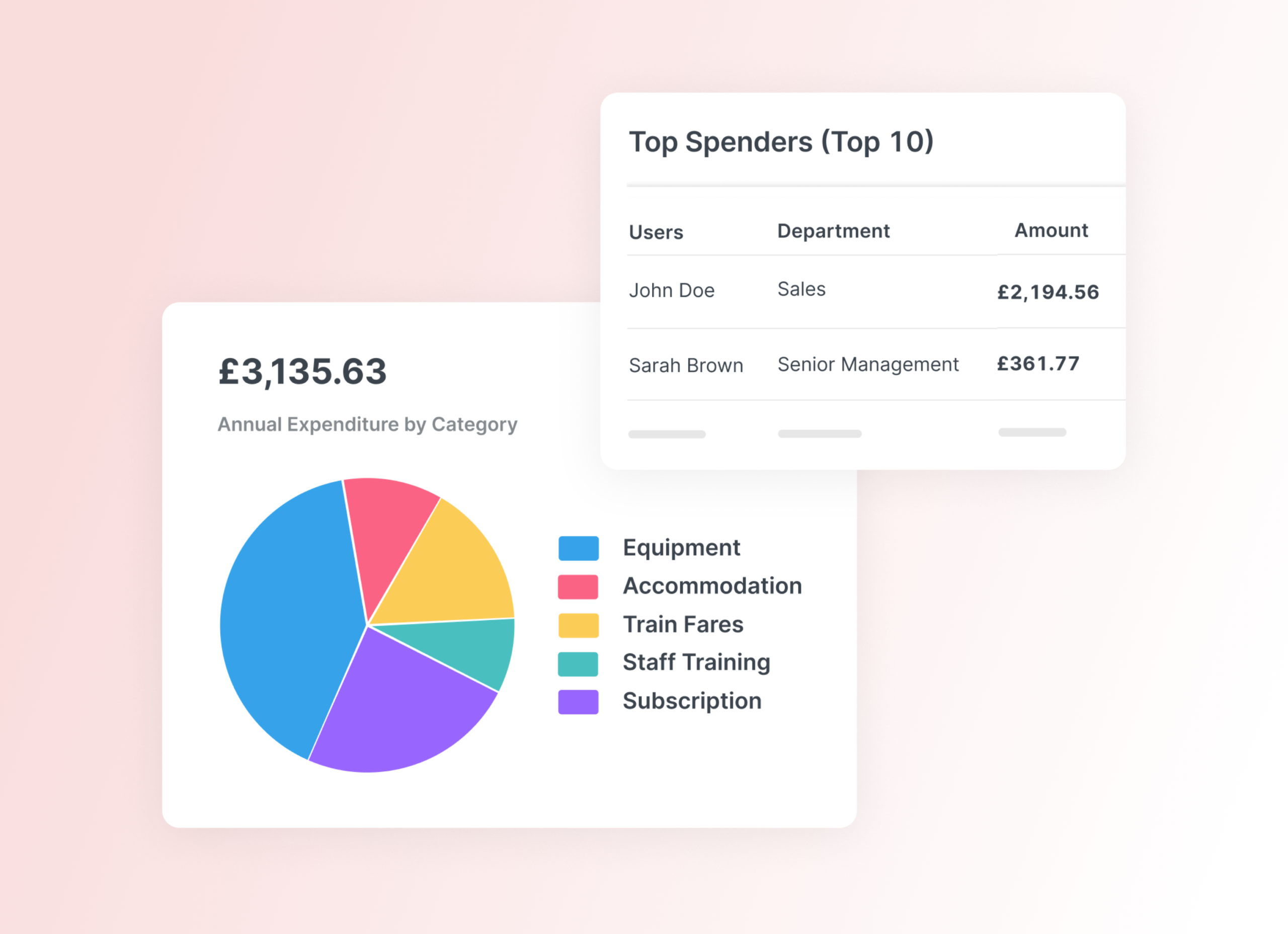
Can We Trust the Current View of Spend?
That means knowing where the data came from, how current it is, whether transactions have been categorized consistently, and whether the picture reflects reality rather than simply what’s been submitted so far.
A dashboard that refreshes every few minutes only creates confidence if it’s built on complete, reliable data. Otherwise, it simply provides a faster view of incomplete information.
A useful way to test this is to ask yourself five simple questions.
- Is all relevant spend included?
- Is it categorized consistently?
- Can the figures be traced back to their source?
- Is the information current enough to support today’s decisions?
- Would you confidently present these numbers to your CFO without checking them first?
Think about how this plays out in practice.
Your reporting shows travel expenditure is running 12% above budget this quarter.
If the underlying data is complete, categorized consistently and fully reconciled, finance immediately starts asking the right question:
Why has travel increased?
If the data can’t be trusted, the conversation becomes something very different.
Is this number even correct?
Instead of analyzing the business, finance spends valuable time validating reports, checking classifications, chasing missing submissions and reconciling transactions before meaningful analysis can even begin.
That’s the hidden cost of poor visibility. The dashboard exists, but nobody trusts it enough to act.
Trust isn’t built through faster reporting. It’s built through consistency.
Look for reporting that makes those checks easy. Category reporting, consistent coding, scheduled reports, transparent data sources and reliable reconciliation all reduce the amount of time finance spends validating numbers and increase the time available for understanding what those numbers actually mean.
What's Likely to Create More Work at Close?
Most dashboards tell finance what has been spent.
Far fewer tell finance what still needs attention.
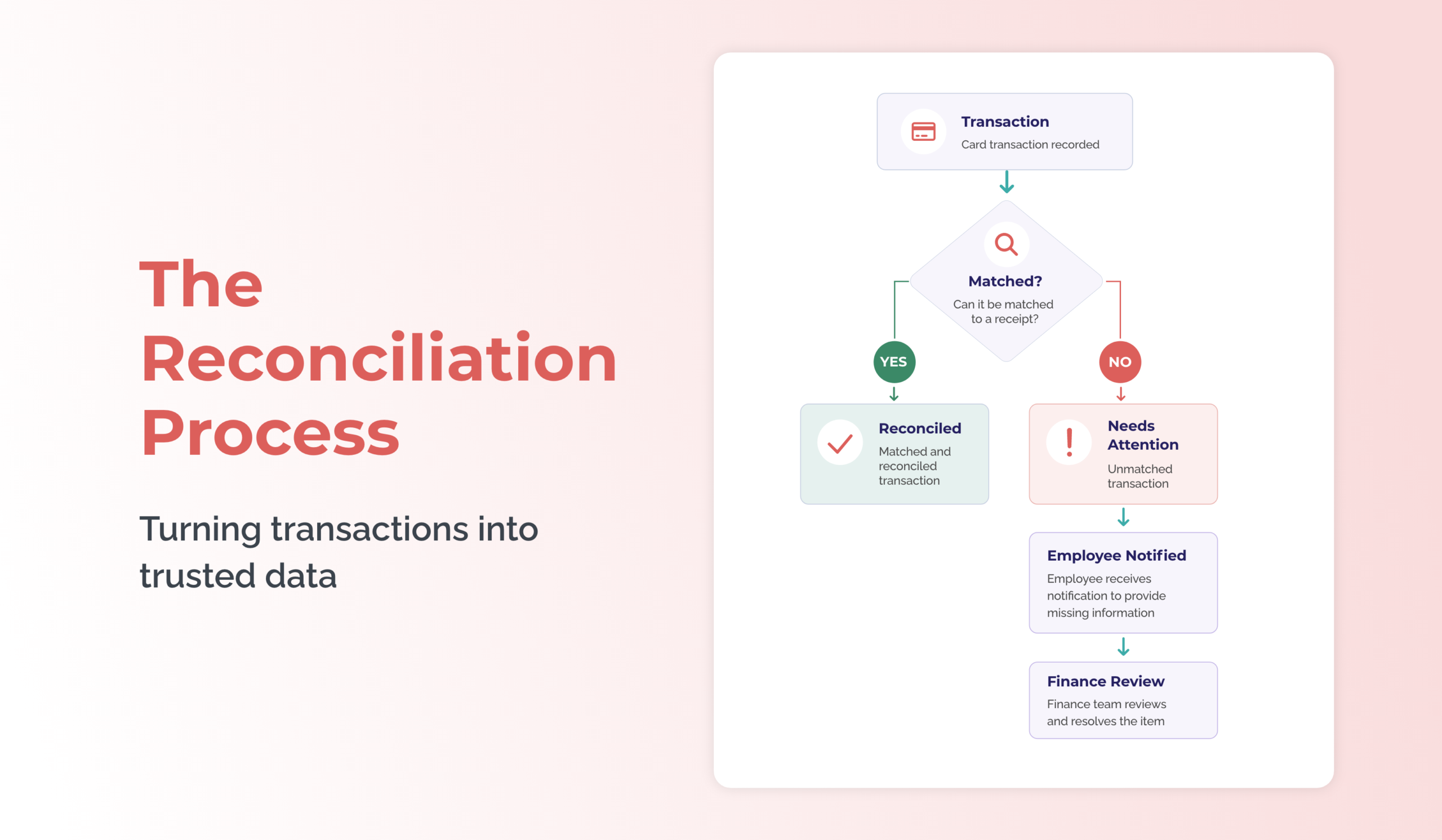
That difference matters because the gap between recorded and reconciled transactions is where month-end firefighting usually begins.
A transaction sitting in the system isn’t useful information until finance knows whether it’s been matched, reconciled and completed.
Every unreconciled transaction is simply future work waiting to happen.
Unfortunately, many organisations don’t discover those issues until the first few days of close, when finance is already under pressure and employees are struggling to remember purchases they made weeks earlier.
Consider a finance team processing hundreds of corporate card transactions every month.
If reconciliation only happens during close, dozens of employees receive requests for missing receipts at the same time. Managers are asked to approve claims urgently, finance spends hours chasing information and the close process slows while everyone catches up.
Exactly the same work could have been completed weeks earlier.
That’s why effective reconciliation is less about month-end than month-long visibility.
When finance can see reconciliation status throughout the month, issues are resolved while they’re still small, receipts are easier to locate and employees still remember the purchase.
The close process becomes confirmation rather than investigation. Look for systems that clearly distinguish reconciled and unreconciled transactions, making it immediately obvious where attention is needed before close arrives.
Want expense data you can actually act on?
Book a demo of ExpenseIn to see how clearer spend visibility can help your finance team spot issues earlier and stay in control throughout the month.
Is There Anything That Needs Attention Right Now?
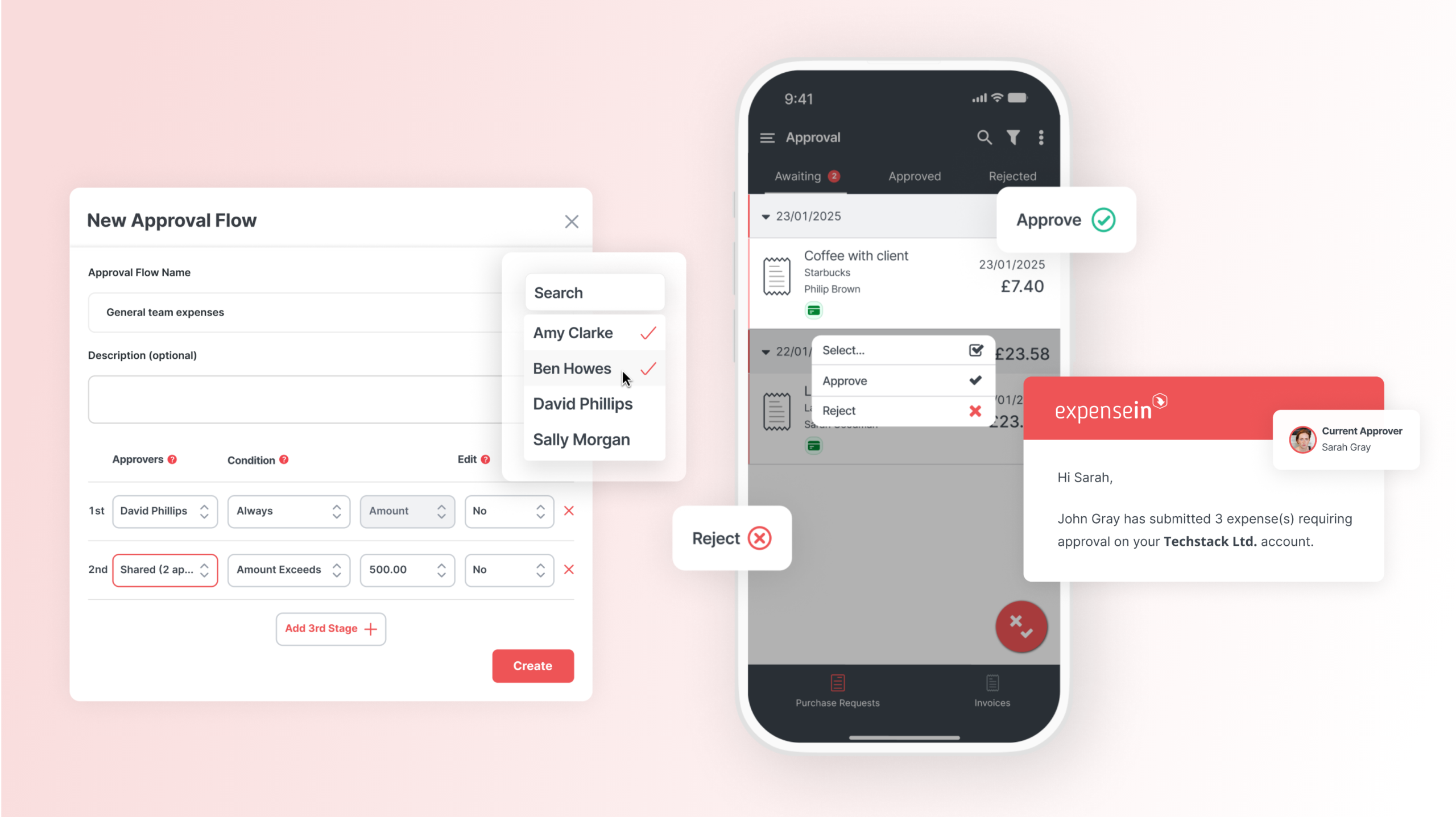
The most valuable real-time reporting doesn’t simply record activity. It highlights exceptions.
Finance shouldn’t have to search for policy breaches, duplicate claims or unusual spending patterns. The system should surface the handful of transactions that genuinely require attention while allowing routine claims to flow through automatically.
This is where real-time reporting starts creating real business value.
Take a duplicate receipt as an example. Caught when it’s submitted, it’s a simple message back to the employee and a correction that takes seconds. Caught during a quarterly audit, it’s a discrepancy that needs investigating, documenting, and potentially recovering. Exactly the same mistake. Completely different cost. The only thing that changed was when finance became aware of it.
The same principle applies to out-of-policy spending, missing VAT information or unusually high claims. When exceptions are surfaced immediately, finance can deal with them while they’re still small. When they’re buried inside thousands of transactions waiting for month-end review, they become distractions that consume valuable time. Perhaps the biggest shift is that finance no longer needs to review everything equally. Routine expenses can flow through an automated process while experienced finance professionals focus their judgement where it genuinely adds value. That’s a far better use of the team’s expertise than manually checking transactions that never needed intervention in the first place.
A Quick Audit of Your Current Expense Reporting
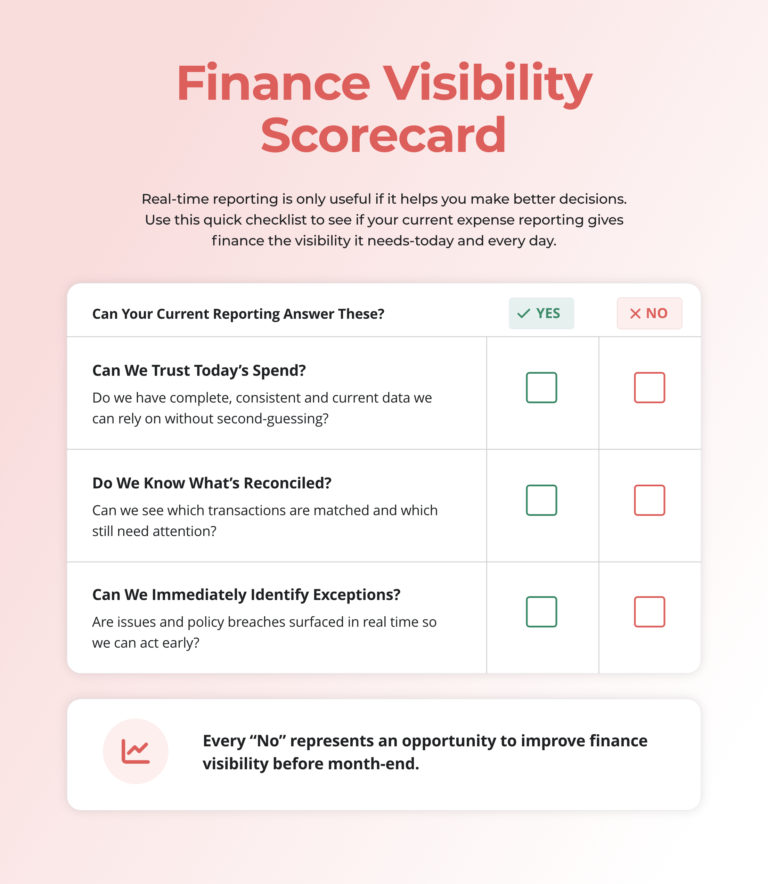
Before investing in a new expense platform—or deciding your existing reporting is good enough—it’s worth carrying out a simple audit. These questions aren’t really about software. They’re about whether finance has the visibility it needs to make confident decisions throughout the month instead of waiting until close. If you can’t answer “yes” to each of these without asking someone to investigate, there’s almost certainly an opportunity to improve both reporting and the finance team’s effectiveness.
The Takeaway
Real-time reporting isn’t valuable because dashboards update more frequently. It’s valuable because finance can make better decisions sooner.
Before judging any expense platform—whether it’s your current solution or one you’re considering—ask three questions.
- Can we trust what we’re looking at?
- What’s likely to create more work later?
- What needs attention today?
If the answer to any of those questions is, “We’d need to go and check,” then the visibility is largely cosmetic.
If those answers are built into the reporting itself, real-time data finally starts doing what finance always wanted it to do: helping people make better decisions with confidence.