#278 The Skills Missing When You Step Into a CFO Role, Ian Goodkind, Chief Financial Officer, Smarsh
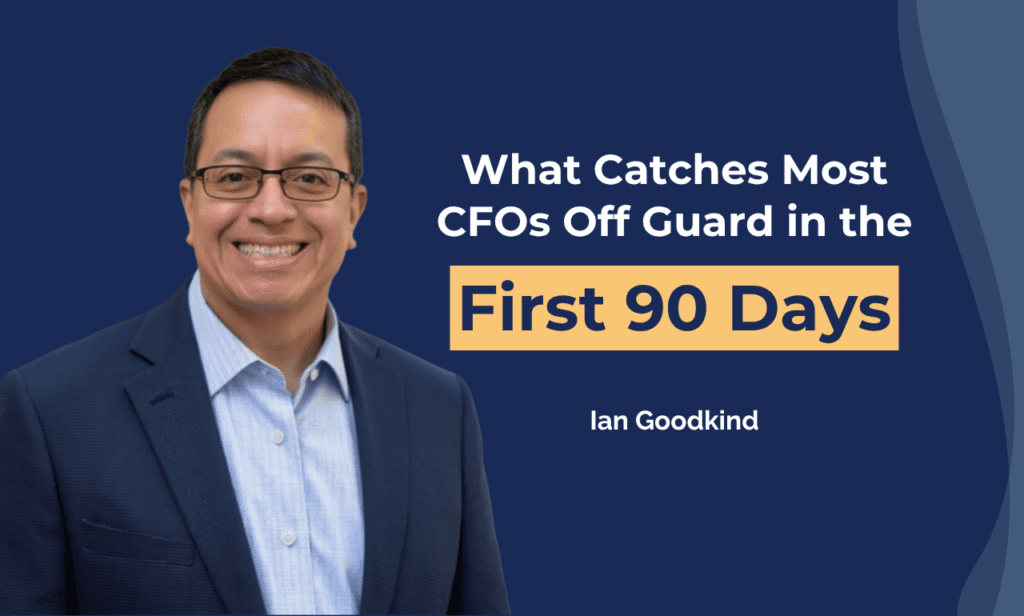

Stepping into a first CFO role is rarely a smooth promotion from finance manager to “bigger calculator.” In this GrowCFO episode, host Kevin Appleby speaks with Ian Goodkind, Chief Financial Officer at Smarsh, about the often‑overlooked capabilities that determine whether a new CFO becomes a true strategic leader or struggles with imposter syndrome. The conversation underscores how the modern CFO role has shifted from pure financial stewardship to that of strategic, tech‑savvy, trusted advisor at the center of complex, AI‑driven and heavily regulated businesses.
Against the backdrop of Smarsh, a profitable, AI‑native leader in communications data compliance and intelligence, Goodkind explains how today’s CFO must understand macro forces, regulation, and technology while also managing non‑finance functions such as IT and operations. He shares practical, experience‑based advice for aspiring and newly appointed CFOs on building external peer networks, developing strategic and listening skills, embracing AI for both efficiency and value creation, and navigating the psychological shift into the C‑suite. The episode delivers a clear message: technical finance skills get a professional into the CFO seat, but it is strategic thinking, curiosity, and people‑centric leadership that keep them there and drive impact.
Key topics covered:
- Smarsh’s mission, regulatory moat, and AI‑native product strategy as the context for Ian Goodkind’s CFO role and growth mandate.
- The evolution of the CFO from “number cruncher” to strategic leader and trusted advisor, requiring deep understanding of the macro environment and industry dynamics.
- The importance of building and leveraging a peer network of CFOs to counter isolation, share best practices, and overcome imposter syndrome in the early stages of the role.
- How active listening, cross‑functional relationship‑building, and regular conversations with sales, strategy, IT and other leaders expand a CFO’s lens beyond purely financial metrics.
- Practical ways finance teams are already using AI for repetitive and manual processes, freeing capacity for higher‑value work while scaling without equivalent headcount growth.
- Why future‑ready finance functions must recruit and develop talent with automation and AI skills, positioning AI as an efficiency and empowerment tool rather than a headcount reduction lever.
Links
Timestamps:
- 0:00:00–0:00:02 – Introduction to Ian Goodkind and Smarsh; mission, customer base, regulatory focus, and the AI‑driven surveillance and compliance platform that frames his CFO mandate.
- 0:00:02–0:00:04 – Dual role of the CFO as steward of AI governance internally and advocate of secure, AI‑native products for highly regulated customers; addressing hallucination and data security concerns.
- 0:00:04–0:00:07 – Strategic “bowling pin” growth framework: moving from archiving to data capture, surveillance, and intelligence; using proprietary data and regulatory specialization as a durable moat.
- 0:00:09–0:00:12 – Advice to aspiring and new CFOs: study the macro environment, understand industry risk beyond the “four walls” of the company, and embrace the role as a core strategist.
- 0:00:12–0:00:15 – Transition from finance operator to trusted advisor: understanding what keeps the C‑suite and board awake at night, widening the lens beyond pure financial risk.
- 0:00:15–0:00:19 – Managing the psychological shift into the CFO role: imposter syndrome, the loneliness of the C‑suite, and how a structured peer network and mentoring mitigate these pressures.
- 0:00:19–0:00:22 – The role of active listening, curiosity, and deliberate calendar design—spending time with sales enablement, customers, and reading widely—to build a holistic, strategic viewpoint.
- 0:00:22–0:00:25 – Overseeing IT as a CFO: why previous collaboration on systems, ERPs, and audit committees makes the transition manageable, and how strong IT leadership complements the role.
- 0:00:25–0:00:28 – Concrete examples of AI in finance like automating repetitive accounting, payroll, and manual processes; setting explicit AI efficiency goals for each sub‑team.
- 0:00:28–0:00:31 – Experimenting with AI in day‑to‑day management (e.g., job descriptions, process benchmarking) and the challenge of training and upskilling finance teams in a rapidly evolving AI landscape.
- 0:00:31–0:00:33 – Reframing AI as a scaling and engagement tool, using automation to avoid adding headcount while removing boring, repetitive work so finance professionals can focus on higher‑value activities.
- 0:00:33–0:00:34 – Why intelligence and risk insight on top of longstanding archiving and capture capabilities represent the next game‑changing phase for regulated industries.
Find out more about GrowCFO
If you enjoyed this podcast, you can subscribe to the GrowCFO Show with your favorite podcast app. The GrowCFO show is listed in the Apple podcast directory, Spotify and many others. Why not subscribe there today? That way, you never miss an episode.
GrowCFO is a great place to extend your professional network. Join GrowCFO as a free member today and participate in our regular networking events and webinars. Premium members can also access our extensive training center and CFO Digital Toolkit. You can enroll in our flagship Future CFO or Finance Leader programs here.
You can find out more and join today at growcfo.net
Podcast: Play in new window | Download