What actually changes when you become a CFO (and why “being good at finance” isn’t enough)
GrowCFO often hears a familiar question from finance leaders:
“The numbers are clean, and the board pack is solid. Why am I not shaping the real decisions?”
The answer is that once the CFO seat becomes the goal, “being good at finance” means very little. It is expected, not rewarded.
Most finance leaders try to earn their CFO stripes by becoming the smartest hustlers in the room. They deliver faster, reconcile harder, stay later, and become indispensable.
The tradeoff? It works until it doesn’t.
“Indispensable” is a great compliment, but it can also become a career ceiling.
The Identity Crisis
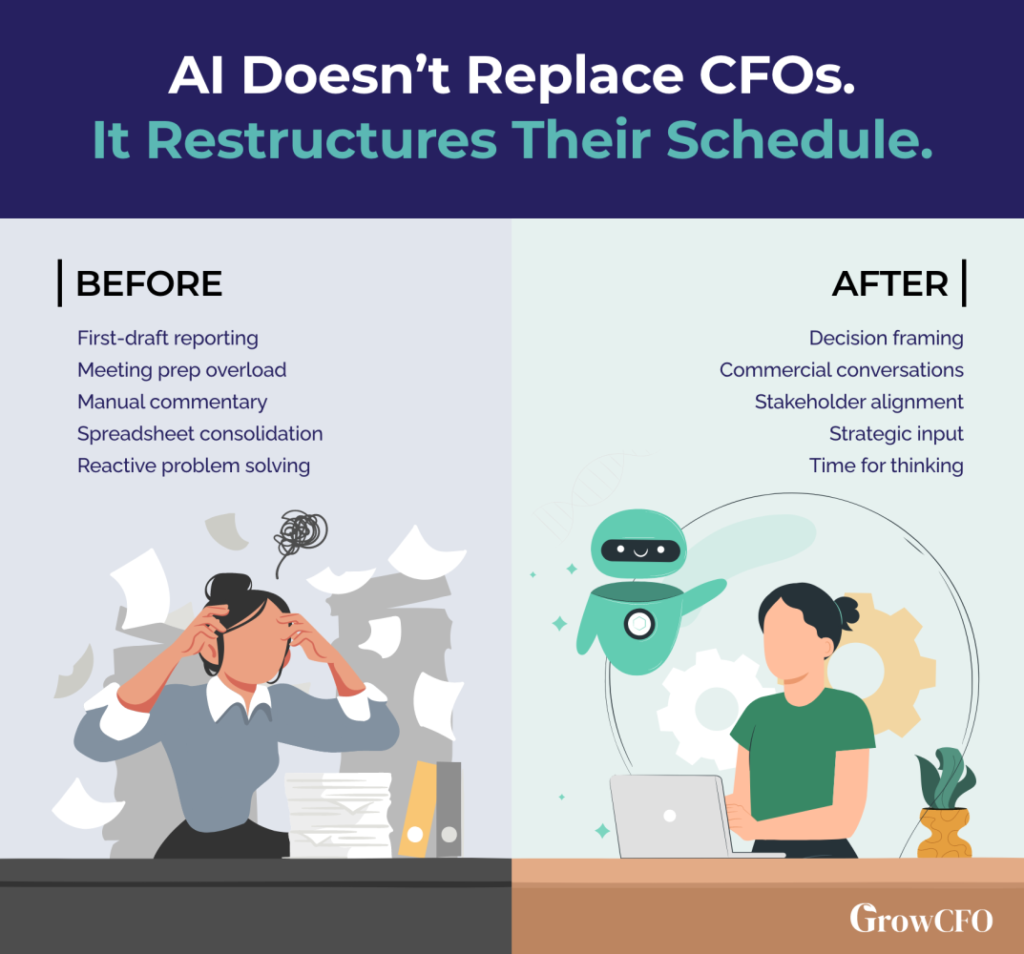
Ask any seasoned CFO, and they will tell you: stepping into the role creates a complete identity shift in how time is used.
The job changes constantly:
- From producing answers to shaping decisions.
- From being right to being believed.
- From effort to leverage.
That is the role, but many finance leaders never recognize the shift because their approach to time allocation never changes.
The spec promises strategy, but the reality often delivers operations, corporate fortune-telling, and damage control.
Suddenly, finance leaders are expected to think long term while spending most of their time solving short-term problems.
At the same time, many finance roles will not exist in their current form within the next few years. The focus is shifting toward analysis, judgment, and influence.
Where Leverage Comes From
Strong reporting alone does not make someone commercial. Commercial leaders understand how the business actually operates.
Spend time with Sales. Learn where deals stall, what customers ask for, and where pressure builds.
Build relationships before they are needed. Mentor teams instead of micromanaging them.
The shift from finance leader to CFO often comes down to three things: self-awareness, commercial curiosity, and the willingness to step outside the finance bubble.
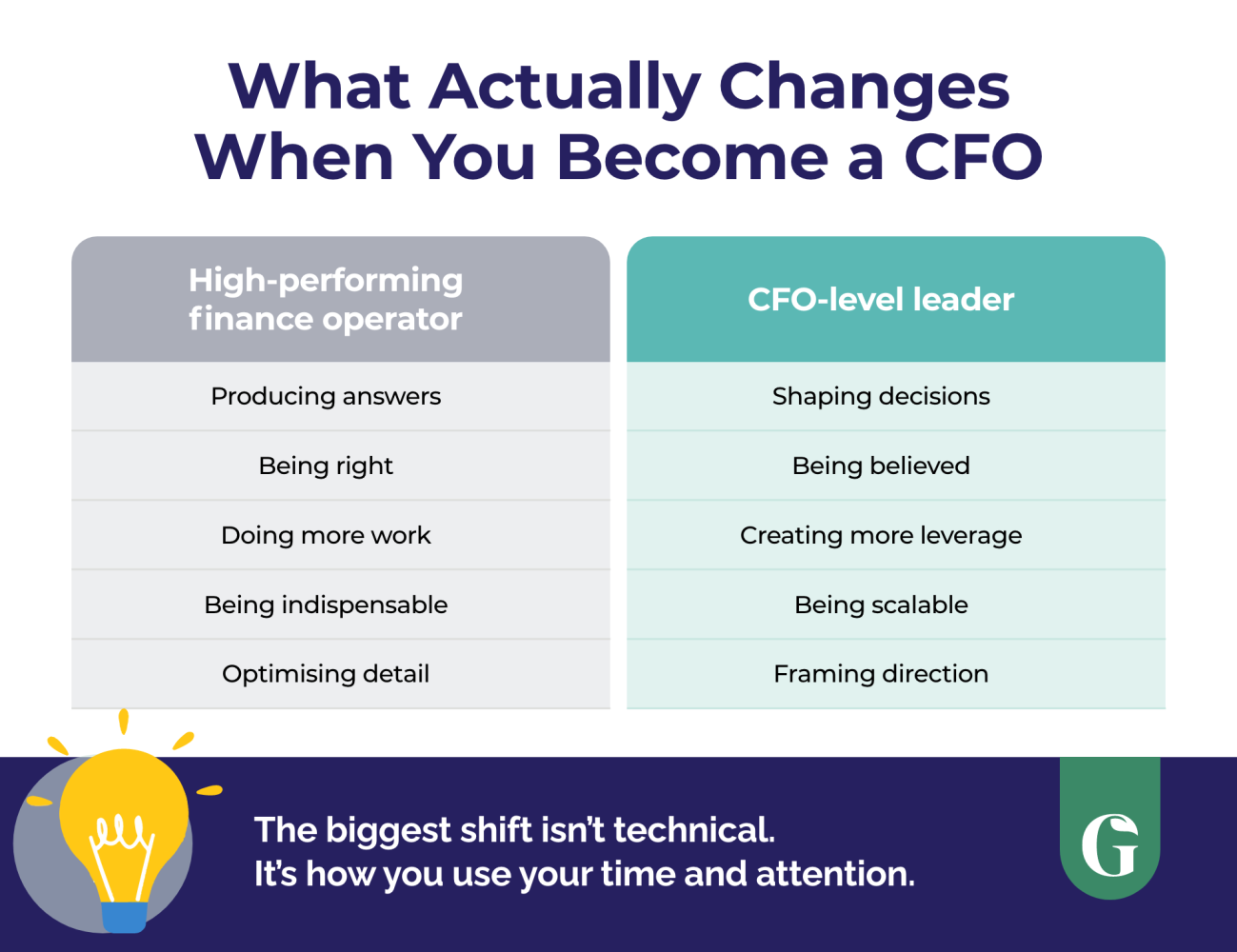
Then comes the critical step: fixing how time is used.
This is where AI enters the conversation.
Start small. Strip out first-draft work. Delegate what does not require judgment. Create space to think, challenge, and influence.
When used properly, AI gives time back.
What finance leaders do with that time determines their impact.
Ignore that shift, and there is a risk of becoming the corporate equivalent of someone still trying to program a VCR.

Case in Point
GrowCFO sees a common pattern repeatedly:
A Head of Finance can be highly respected, yet still sit on the edges of strategy.
The instinct is often to “be more vocal,” but that rarely changes anything.
What tends to work better is reallocating time.
When time spent on first-draft work—commentary, meeting preparation, issue logs—is reduced using AI, several hours each week can be redirected into activities that genuinely shape decisions. For example, improving commercial approval workflows with teams like Sales Operations.
Over time, that shift changes more than just output. It changes how the business operates.
As a result, finance gets pulled into decisions earlier—not by demanding a seat at the table, but by becoming part of how the table operates.
For finance leaders who want to stop operating like a back-office calculator and build the commercial leverage that actually leads to the CFO seat, this is exactly what GrowCFO teaches in the Future CFO Program.
Join a free Future CFO Program preview event here