The hidden cost of a finance stack you’ve outgrown
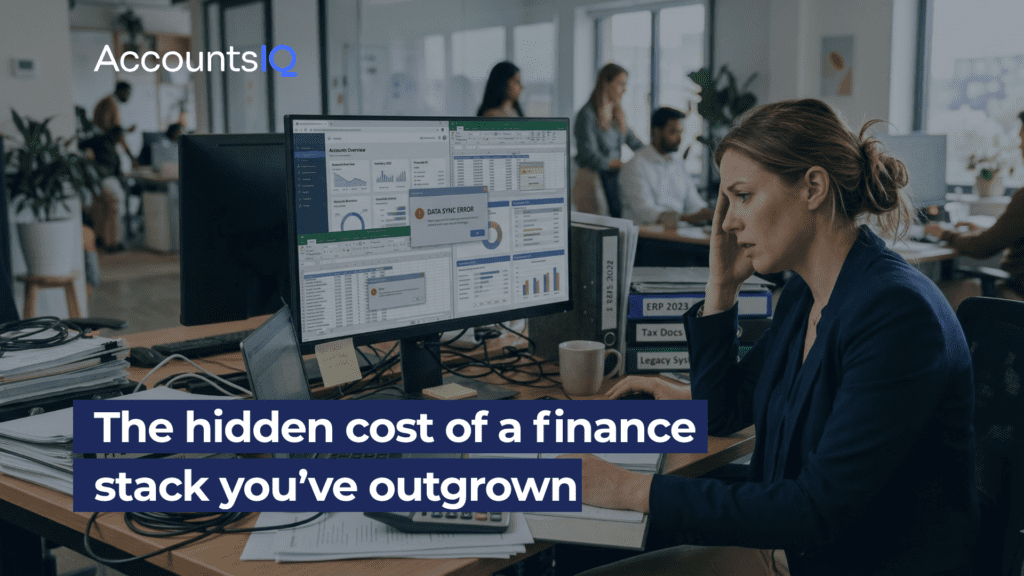
Table of Contents
There is a moment that most finance leaders recognize, even if they struggle to name it:
- The month-end or year-end close takes longer than it should.
- A board question requires an export, a pivot table and a phone call before you can answer it.
- The consolidation process still lives in a spreadsheet.
The system works, but not quite well enough, and never without significant effort from the teams and individuals using it.
This is the cost of a finance stack you’ve outgrown. It is rarely dramatic, but the impact on the business can be. It shows up gradually, in the hours spent patching systems together, in the add-ons that were supposed to solve one problem but created two more, and in the reporting gaps that make real-time decisions harder than they should be.
And according to recent research from AccountsIQ, it is far more common and far more costly than most organizations realize.
The regret most CFOs won’t admit to
AccountsIQ’s CFO Mindset 2.0 report surveyed 1,000 senior finance professionals in the UK and Ireland and found a striking result: 94% of finance leaders who have implemented an ERP said they regret it. The reasons cited most often were lack of training or support (36%), too much unused functionality (31%), and long implementation timelines (31%).
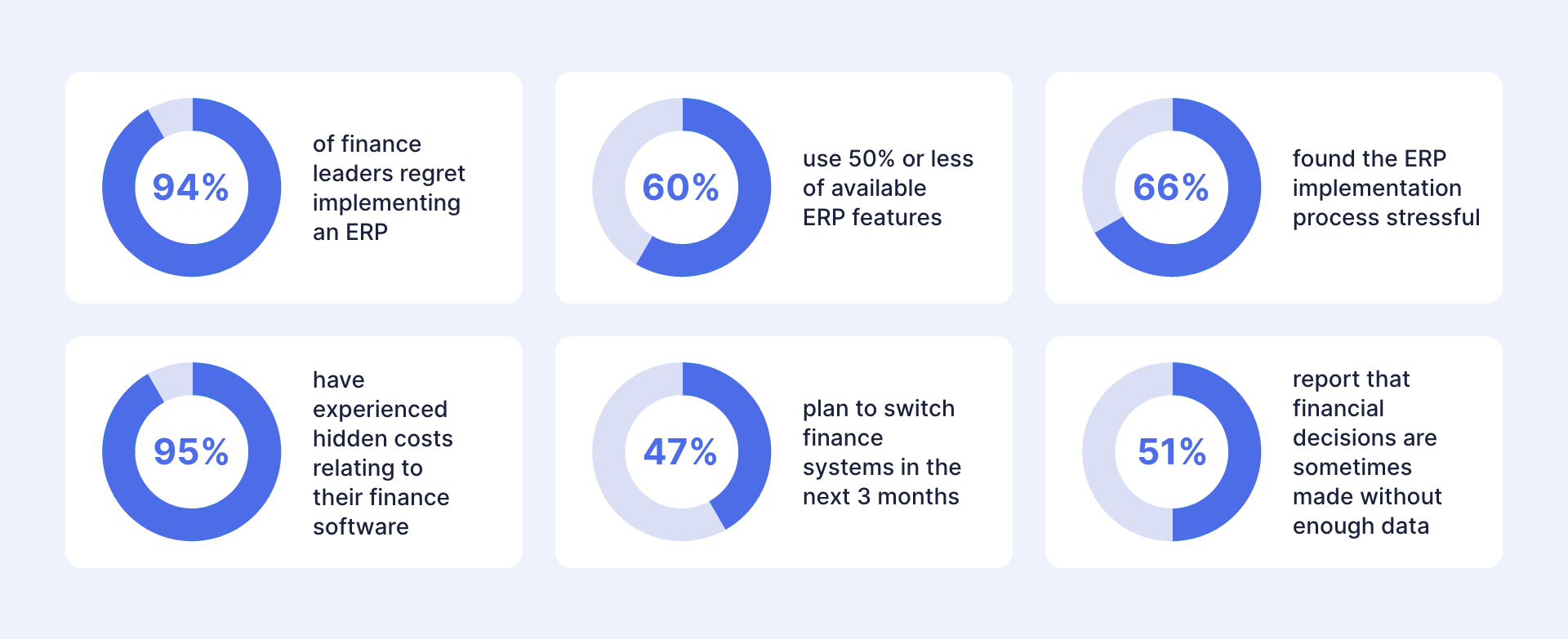
This points to a pattern that many finance leaders have lived through. Faced with the limitations of a starter system like Xero, QuickBooks, or Sage 50, the instinct is to solve the problem by upgrading to something more powerful. Enterprise platforms look impressive in a demo. But the reality of implementing a system designed for a large organization when yours is mid-sized and growing is often months of disruption, underutilized features, and costs that exceed every projection.
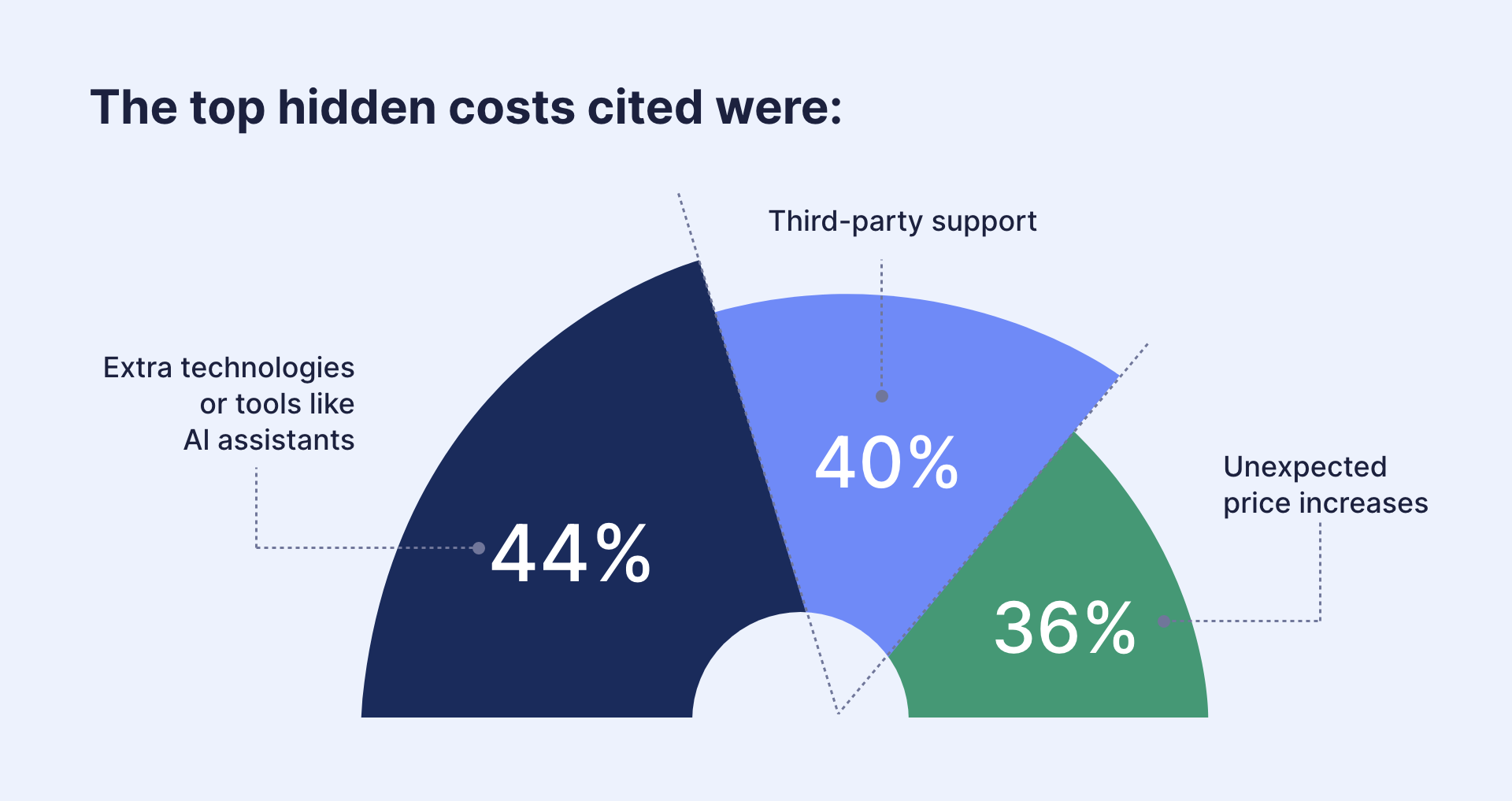
The report found that a quarter of leaders who implemented an ERP took more than seven months to fully transition onto the new system. Three in five used less than half of the available features. And 95% reported experiencing hidden costs with their finance software provider with more than two in five saying those costs were between 50 and 100% higher than expected.
“The fact that so many CFOs are switching for better consolidation, reporting and value says a lot about where the pain points are. Leaders want tools that give them visibility and control without adding another layer of complexity.”
Emma Storer-Martin, Head of Sales, ExpenseIn (quoted in AccountsIQ CFO Mindset 2.0)
The hidden cost isn’t just financial
It is tempting to frame this as a technology problem. But AccountsIQ’s earlier Confessions of the Finance Function report which surveyed over 500 finance professionals reveals that the cost of the wrong system is not just measured in license fees and implementation days. It is measured in the people running it.
The cost doesn't clock off
The impact extends beyond the working day. Almost every CFO, Head of Finance, Financial Controller and Finance Director surveyed said they work weekends or evenings to clear their workload, with 64% saying they do this often or always. Last year, 85% of leaders said they needed an extra one to two days a week just to clear their backlog.
Fragmented systems and manual workarounds are not just inefficient. They drain the people you need most and they push ambitious finance professionals toward roles where the tools are better.
The report found that 94% of senior finance professionals and 96% of younger colleagues said their current role makes them frustrated.
- Manual reporting was the top source of that frustration for both groups.
- Around a quarter of all respondents cited having to use separate accounting systems as a significant pain point.
- And a third of finance professionals said they spend as much as a quarter of their week on labor-intensive data collection, not analysis, not decisions, just gathering numbers.
The impact extends beyond the working day. More than a third of professionals had taken time off due to work-related stress. Over half of younger finance professionals said they did not plan to stay in the profession for more than ten years.
Fragmented systems and manual workarounds are not just inefficient. They drain the people you need most and they push ambitious finance professionals toward roles where the tools are better.
The signs you’ve outgrown your stack
Starter and legacy systems were designed for a specific stage of business. They do the job well up to a point. The problem is that this point can creep up on you. Here are the signals worth paying attention to:
- Consolidation still happens in Excel. If you are managing multiple entities, subsidiaries, or cost centers by manually combining spreadsheets, the system is not keeping pace with your structure.
- Reporting requires too many steps. If answering a straightforward board question requires an export, a manual build, and a significant time investment, you don’t have visibility where you need it.
- Your add-on list keeps growing. Every add-on that bridges a gap between your core system and what you actually need is a signal that the core system is no longer the right fit.
- Month-end close is an event. If close feels like a significant organizational effort rather than a routine process, the underlying system is likely a contributing factor.
- Finance team capacity is going on admin, not analysis. If your best people are spending their time gathering and reconciling data rather than interpreting it, the tools are working against you.
Why CFOs end up overbuying and what to do instead
The CFO Mindset 2.0 research identifies a common trap: when leaders outgrow a starter system, they often assume the next step is an enterprise ERP. It is the most visible option and carries a certain credibility. But for mid-sized organizations, it frequently means paying for capability you will not use, managing an implementation that takes far longer than projected, and inheriting a system built for a much larger and more complex operation.
The report found that 60% of ERP users use 50% or fewer of the features available to them. The average ERP costs a mid-sized organization around £100,000 a year. On that basis, approximately £50,000 is effectively wasted annually and that is even before hidden costs are factored in.
The alternative is to start with a clear needs analysis rather than a vendor shortlist. The most useful questions are practical ones: Where are the biggest friction points in the current process? What does consolidation need to look like at our scale? What integrations are non-negotiable? What does the finance team actually need to do their jobs well and what is noise?
There is a middle ground between a starter system and a full ERP. Mid-market platforms designed specifically for growing organizations that combine multi-entity consolidation, real-time reporting, and automation without the implementation overhead of enterprise software represent an option that is often overlooked because it sits in a less visible part of the market. But for finance leaders navigating that in-between stage of growth, it is often where the best value lies.
What ‘good’ looks like on the other side
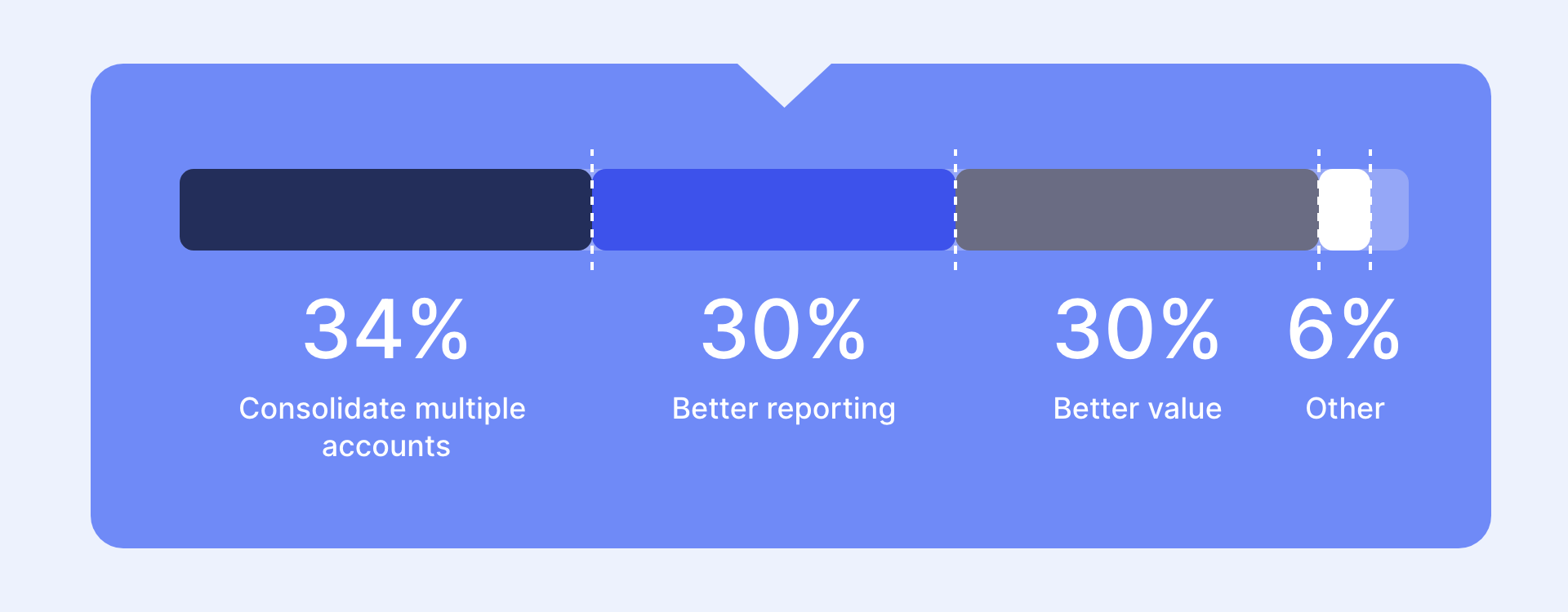
The CFO Mindset 2.0 report describes what finance leaders are actually looking for when they make a change: consolidation across multiple accounts (the top driver at 34%), better reporting capabilities (30%), and better overall value (30%). These are not aspirational goals, they are the foundations of a functional finance operation at scale.
When the right system is in place, the difference is felt in process, strategy, and culture. Finance processes become faster and more reliable. Leaders can access live data across entities rather than chasing it through manual exports. The close becomes a process rather than an event. And critically, the finance team can spend more time on the work that actually matters: analysis, forecasting, business partnering, and decision support.
“Running reports now is quick and intuitive and we’ve got the capability to do multi-dimensional reporting, which is incredibly valuable to us.”
Natalie Hopkins, Finance Director, Thermatic (quoted in AccountsIQ CFO Mindset 2.0)
AI readiness starts with getting the foundations right
There is one more dimension worth considering. Finance leaders increasingly recognize AI and automation as a priority: AccountsIQ’s research found that 26% of CFOs believe AI and automation will drive the most significant change in the finance function by 2030. But the same research makes clear that AI tools are only as effective as the data and systems they sit on top of.
A fragmented finance stack with data spread across disconnected systems, manual processes filling the gaps, and no single source of truth is not AI-ready. It doesn’t matter how good the AI layer is if the underlying data is inconsistent, incomplete, or locked in a spreadsheet.
Getting the finance platform right is not just a technology decision. It is the prerequisite for everything else, better reporting today, and real AI capability tomorrow.
The practical next step
If any of the signals above feel familiar, it is worth being deliberate about what comes next. The most useful starting point is an honest assessment of where the current system is creating friction, not a list of features you don’t have, but a clear picture of where the team is spending time they shouldn’t be.
From there, the question is whether you need more of what you have, something different at the same scale, or a platform that is genuinely designed for where the business is going.
AccountsIQ works with mid-market organizations navigating exactly this transition. If you’re evaluating your options, their comparison resources are a useful starting point for understanding how different platforms stack up for businesses at your stage of growth.
This article was written by GrowCFO in partnership with AccountsIQ. Research data referenced is drawn from AccountsIQ’s CFO Mindset 2.0 (2025) and Confessions of the Finance Function reports.