3 AI Moves That Turn A Finance Update Into A Board-Ready Story
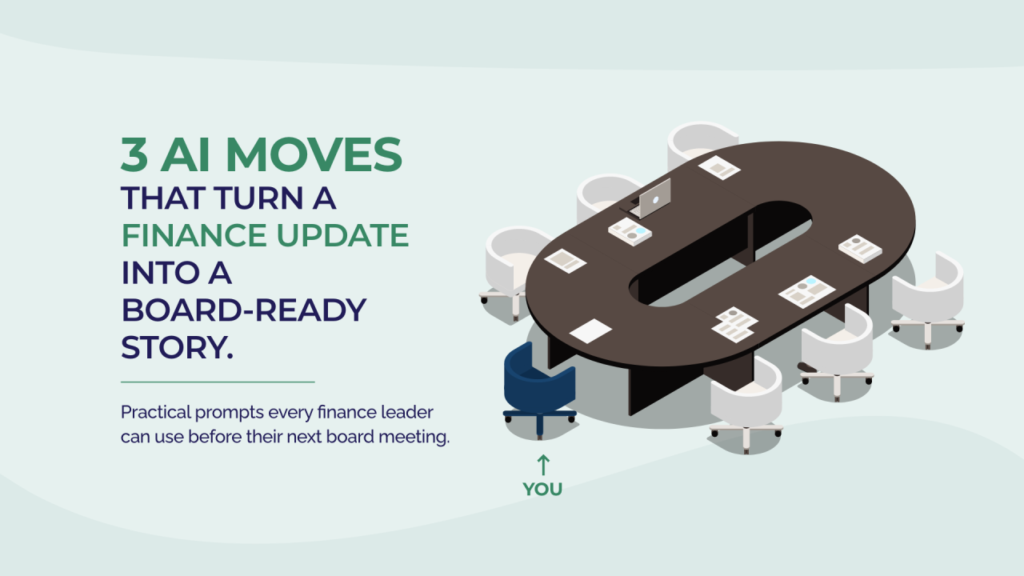
Quick note before we start: If boardroom readiness is an area you’re actively developing, the next Future CFO Program Preview Event takes place on 5 August at 4:00 pm BST.
Book your place here.
Most board packs are accurate, but not persuasive.
GrowCFO has worked with many finance leaders preparing for board meetings, and the same pattern appears repeatedly: hours are spent making sure the numbers reconcile, while comparatively little time is spent thinking about how the board will receive the message.
That ratio is backwards, and AI is exactly the right tool to fix it, if you use it for the right fifteen minutes.
Here are three moves worth stealing.
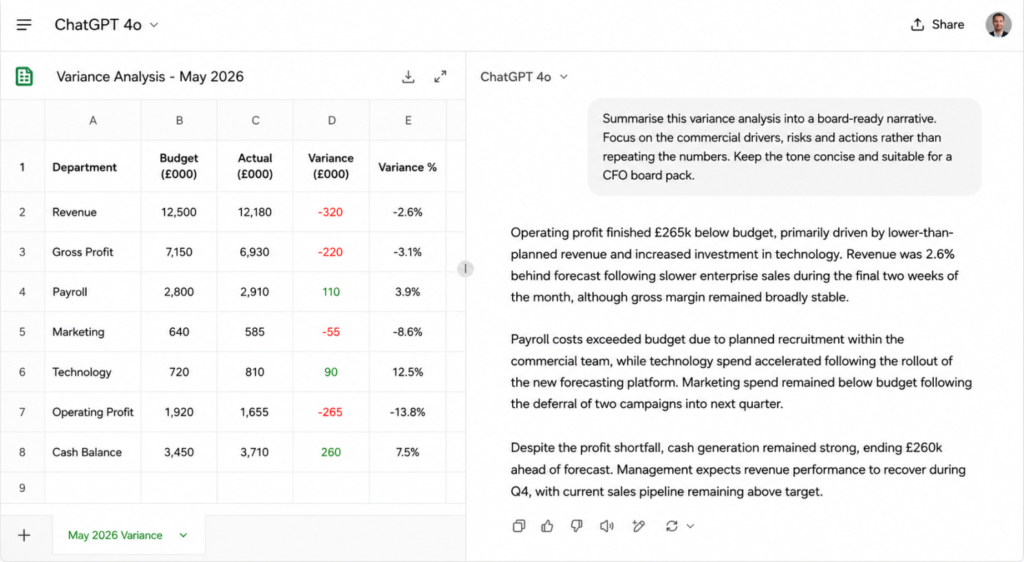
1. Turn your variance table into a one-paragraph exec narrative
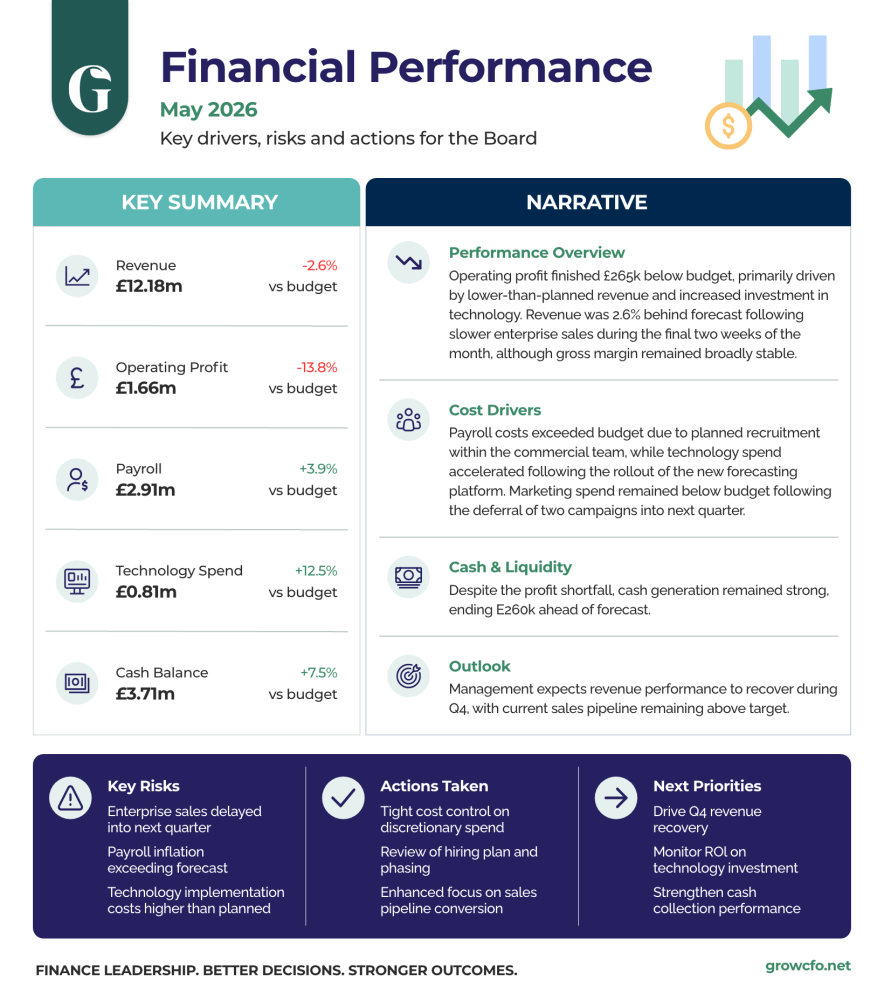
Most people paste a variance table into AI and ask for “a summary.” You get back a reworded table. Not useful.
Here’s how to start:
– Paste the table and tell the AI who’s reading it: “This is going to a board of 6 non-execs, most without a finance background.”
– Ask for the story, not the numbers: “Explain what changed, why it changed, and what we’re doing about it — in one paragraph, no jargon.”
– Force it to lead with the implication: ask explicitly for the sentence that answers “so what does this mean for the plan?” to come first, not last.
– Cut it in half yourself: AI narratives run long. Your job is deciding what actually earns board attention.
2. Build a “hard questions” prep sheet before you build the deck
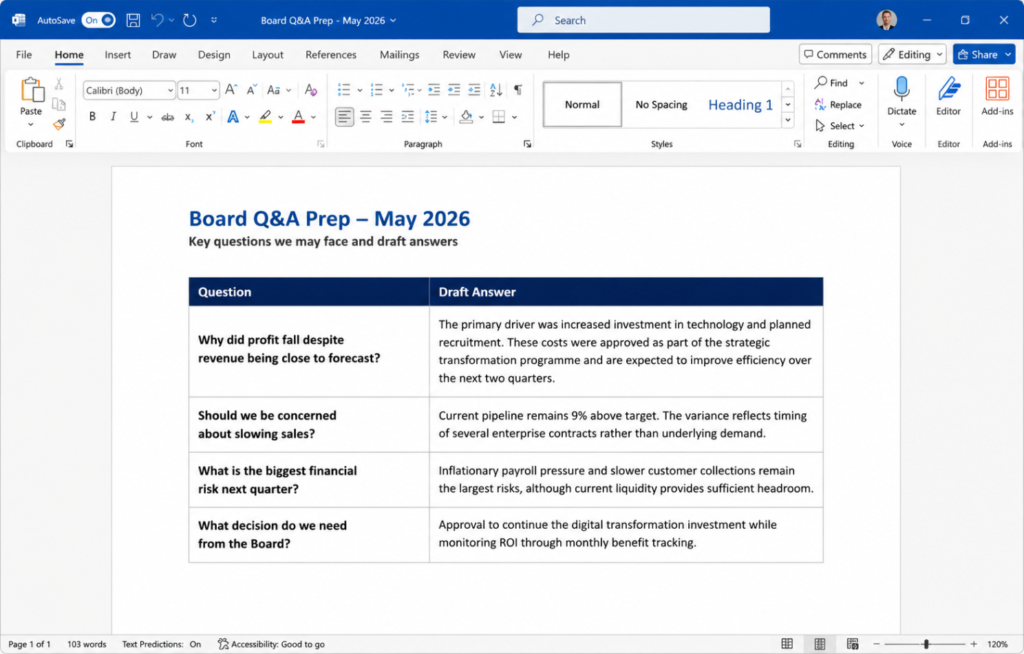
Boardroom confidence usually isn’t improvised. It’s rehearsed. Before you touch PowerPoint, get AI to help you anticipate the room.
Here’s how to start:
– Feed it your numbers and ask it to play the skeptic: “You are a non-exec director reviewing this pack. List the 8 hardest questions you’d ask.”
– Draft your answers first, unpolished: get a rough answer down for each question before you worry about phrasing.
– Ask AI to stress-test your answer: “Where is this answer weak or evasive?” It’s a surprisingly good editor for spotting where you’re hiding behind vagueness.
– Print it, don’t present it: this document is for your prep, not the board pack.
3. Turn a messy management pack into a one-page board summary
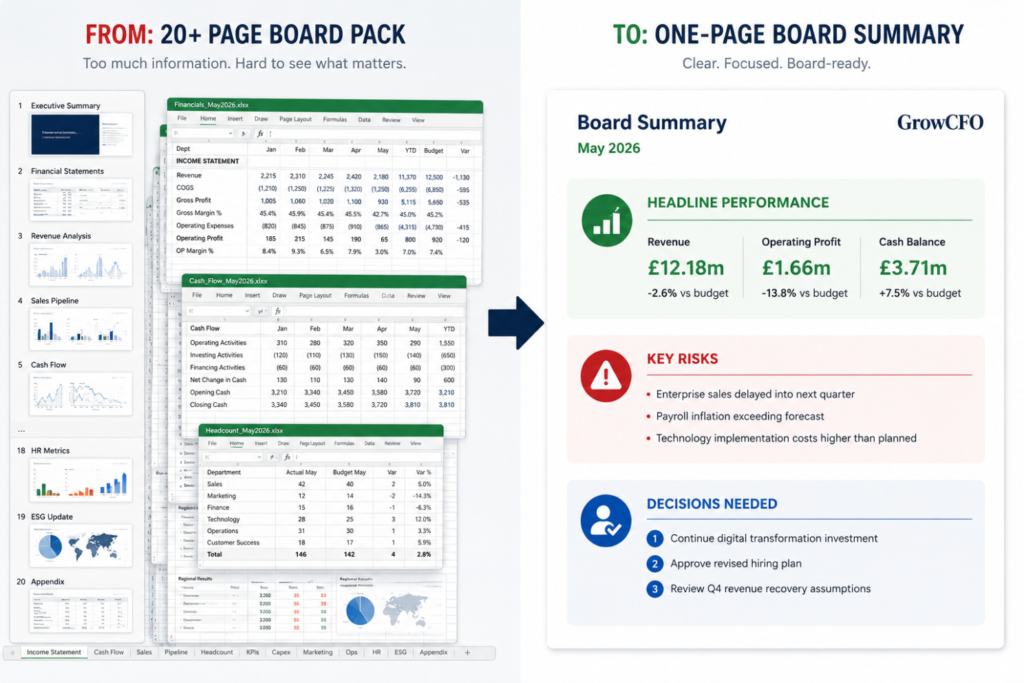
Boards don’t want your management pack. They want the one page that would exist if they only had five minutes, so build that page deliberately instead of hoping they find it themselves.
Here’s how to start:
– Upload the full pack and set a hard constraint: “Summarise this onto a single page for a board with five minutes to read it.”
– Ask for three sections only: headline performance, key risk, and the one decision you need from them.
– Have it flag anything it excluded: ask “what did you leave out, and why,” so you’re making the cut deliberately, not by accident.
– Sense-check it against your own judgement: AI will sometimes bury the actually-important risk under the actually-obvious one. You’re still the editor.
The One Thing to Remember
These moves focus on making the board’s job easier, which defines true boardroom readiness. While AI can draft narratives, anticipate questions, and condense packs, it cannot determine what truly matters to your board or identify real governance risks when handling sensitive data. That essential judgment is the core focus of the AI courses in the Future CFO Program.
Future CFO Program Preview Event is on 5th August at 4 pm BST
Which of these three would save you the most time next board cycle? Reply and let me know.
P.S. Curious how these moves hold up on security? Join Guy Weaver (GrowCFO), James Hunter (CFO, AccountsIQ), and Pascal Virmaud (AccountsIQ) on 29 July, 4-5pm GMT+1 for ‘Can Finance Teams Trust AI?’, a live roundtable with a free AI Playbook for all attendees.
Register here.