All You Need to Know About the CFO Seatbelt Trap

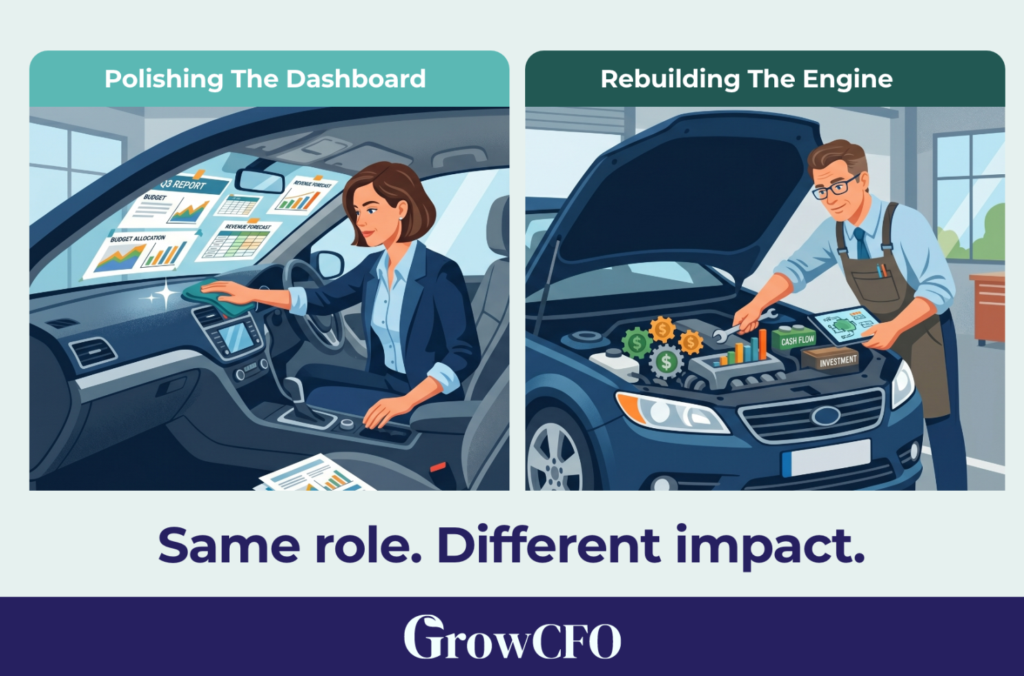
Are you known for doing the work, or for shaping how that work gets done? See, the finance leaders who progress to the CFO level aren’t the ones with the cleanest month-end. They’re the ones who can spot messy operations and redesign the engine rather than polish the dashboard.
The bottom line? Getting better at outputs won’t get you the seat because, at a certain point, your craft stops being the thing that elevates you and starts being an anchor.
That shift affects everything from time management to conversation framing and the role’s perception within your network.
The ‘seatbelt trap’ is when your technical reliability keeps you stuck delivering the work, rather than being trusted to shape decisions and lead at a CFO level.
At GrowCFO, we help finance leaders break out of this by shifting from delivery to design, so they can operate at a strategic, decision-shaping level.
The difference between a safe pair of hands and a decision shaper is night and day.
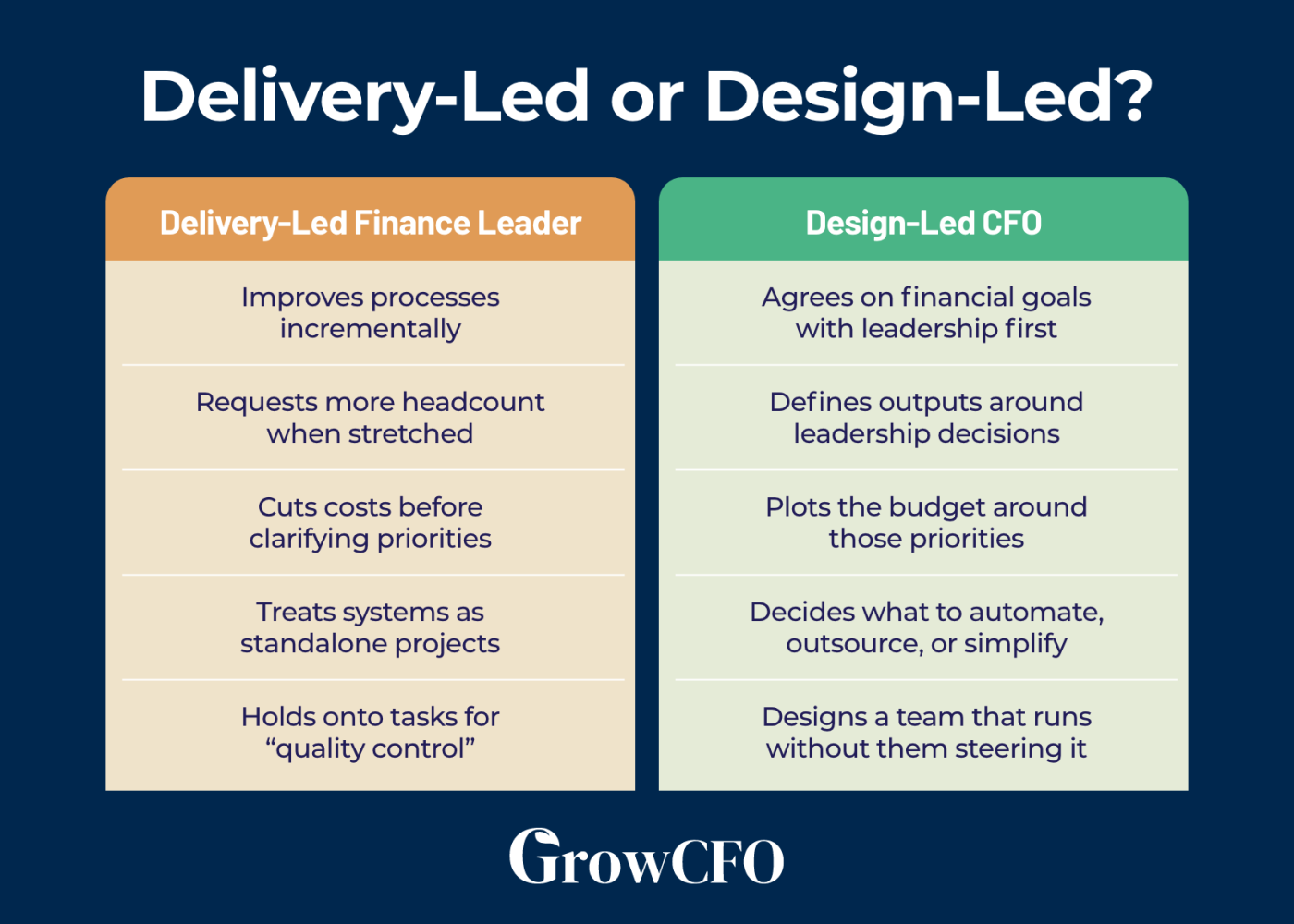
Delivery-led finance leader:
- Improves existing processes incrementally
- Requests additional headcount when capacity is stretched
- Focuses on cost savings before prioritising
- Treats systems as standalone projects
- Holds onto tasks in the name of control or quality
Design-led CFO:
- Designs a team so it works without them steering it
- Agrees on financial goals with the leadership team first
- Defines outputs around what needs leadership support
- Plots a new finance budget around those priorities
- Determines what to automate, outsource, or simplify
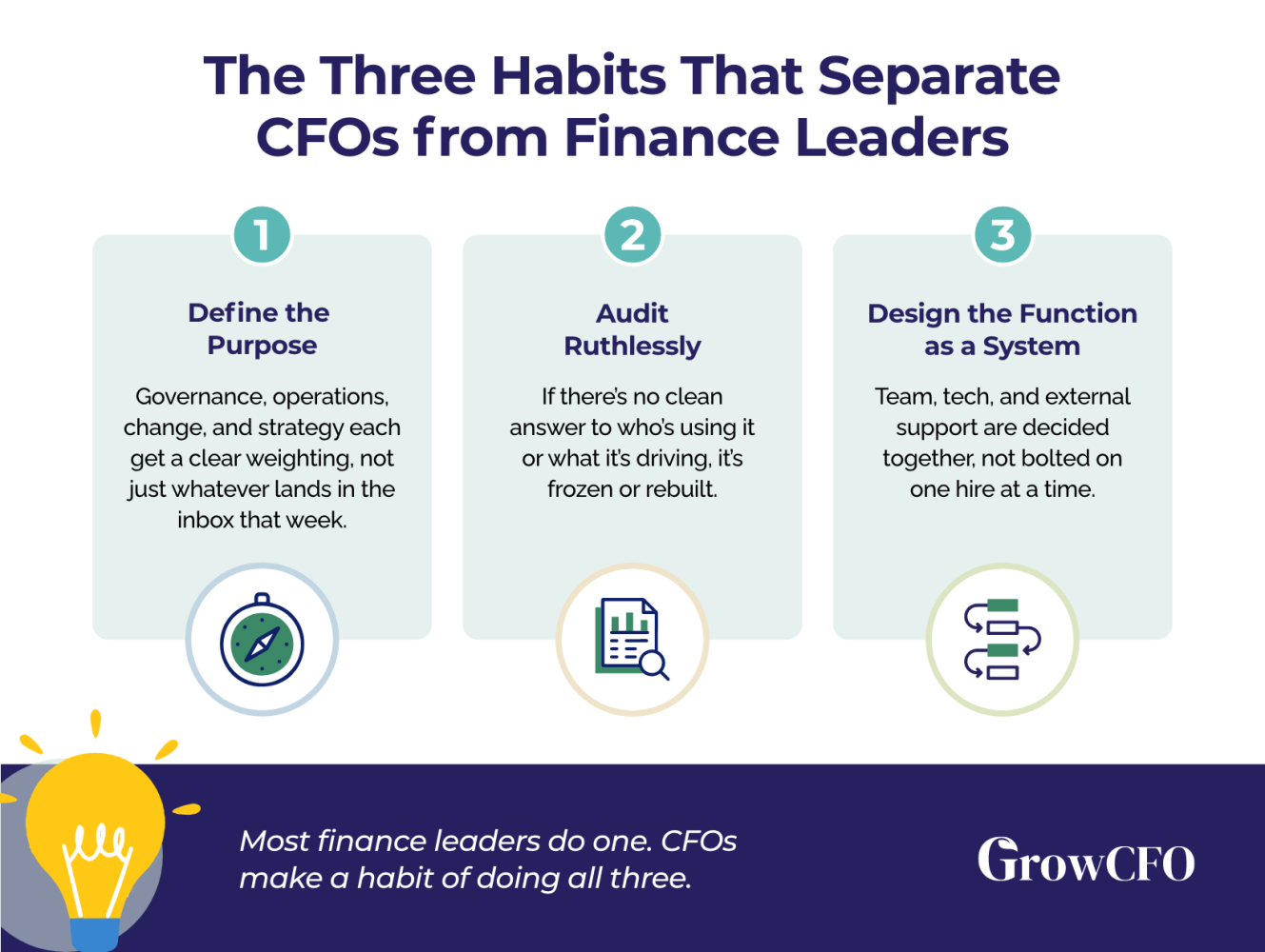
In practice, it’s evident in these three habits:
- They define the purpose before the work defines it for them. Governance, operations, change, and strategy each get a clear weighting, not just whatever lands in the inbox that week.
- They audit ruthlessly. If there’s no clean answer to who’s using it or what it’s driving, it’s frozen or rebuilt.
- They design the function as a system. Team, tech, and external support teams are determined together.
Most finance leaders only utilise one of these, but CFOs make a habit of doing all three.
The impact is usually incremental at first. Recurring requests turn into recommendations, a cookie-cutter report is removed here, and a manual process is automated there.
These changes may be small, but together, they change how the role supports the business. One goes from being a source of information to a decision driver.
Practical steps you can take this week to start shifting from delivery to design:
Start by writing down your finance function’s objectives. Keep it to one page, test it with a few key stakeholders, and ask them what they would prioritise and what they wouldn’t.
Next, review your core outputs, be clear on who uses what, and the decisions they inform. If there isn’t a clear answer, it’s worth reconsidering its place.
Finally, sketch out a short-term plan for the next 30 to 60 days. It’s a great way to show ownership of your bigger-picture idea from where you’re currently sitting.
I see the merits of this approach all the time. When a finance team swaps a long list of improvements for a one-pager of the company’s top priorities, and what finance will do to support them, three things tend to happen:
- The close shortens
- Reports no one reads disappear
- The CEO conversation flips from ‘Can we get more reporting?’ to ‘What do you recommend?’
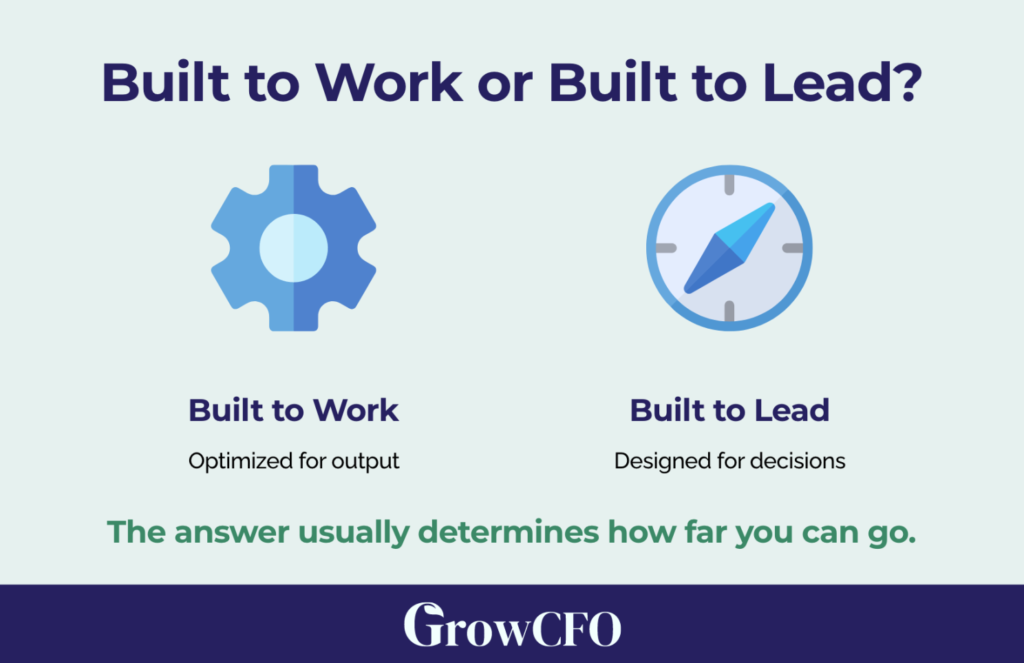
The underlying question is straightforward, and your answer usually determines how far you can go.
Is your finance function built to work or built to lead?
If you recognize the seatbelt trap in your own role, join the next free Future CFO Preview Event to see how to move beyond it.
In the session, you’ll see how the Future CFO Program is designed to shift you from delivery to design through a structured, mentor-led journey focused on strategic leadership, influence, and decision-making.
Save your seat here.