
When Technicality Shifts From Gains to Debt

Technical excellence might be one of the fastest ways to progress early on, but at the executive level, it can slowly limit impact.
GrowCFO has seen this repeatedly: finance leaders try to master everything alone, but eventually discover that approach does not scale.
Doing exactly what is expected feels safe. It is measurable, predictable, and early in a finance career, it is often how progression happens.
But once the CFO seat comes into view, the rules change. A perfect report no longer earns influence; it simply proves the baseline has been met.
What people notice instead is whether the business moves differently because that leader is in the room.
The Key Takeaway: Leadership Leverage in Practice
At CFO level, value is driven less by what someone can personally deliver behind a laptop and more by what they can achieve through leadership, influence, and relationships.
The first 100 days in a leadership role shape the tone for everything that follows. Finance leaders need to demonstrate quickly that they can help steer the business, not just support it.
The Difference Between Doers and Decision-Drivers
The gap between doers and decision-drivers becomes increasingly obvious at senior levels.
Decision-drivers:
- Create direction instead of waiting for it
- Challenge assumptions
- Build strong partnerships
- Make time to think
- Develop teams that can operate autonomously
Doers:
- Stay in their lane
- Choose accuracy over influence
- Focus on low-impact tasks
- Solve everything themselves
- Accidentally become the bottleneck
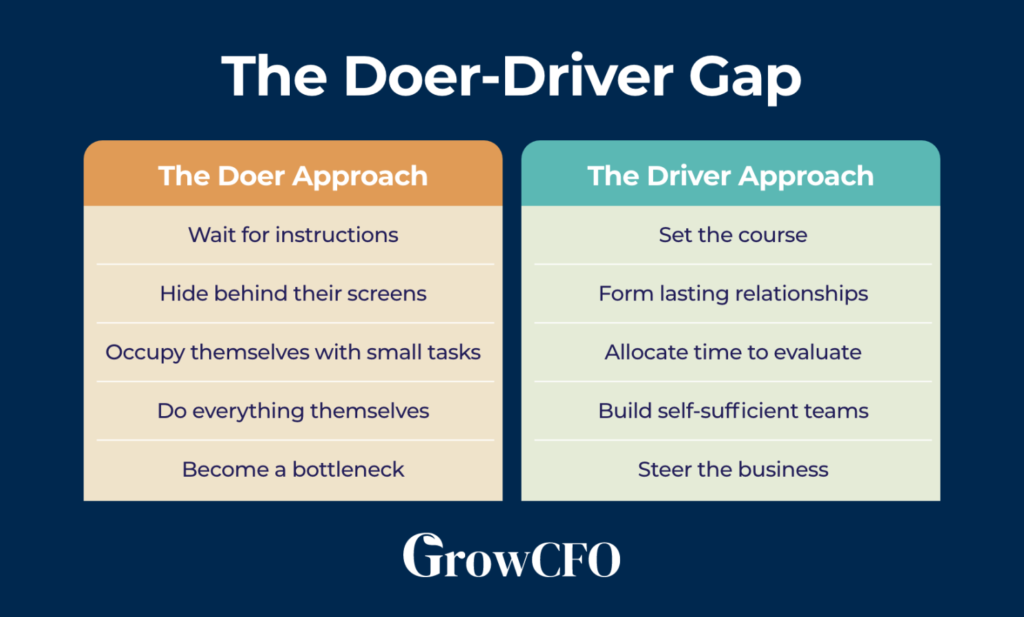
In short, leaders who focus only on the small details condition the business to see them as the “fact-checker,” not the decision-driver.
This Week, Try This:
Design the role around what actually matters instead of getting buried in the proverbial fine print.
1.) Get your goals in writing
Book 30 minutes with your manager and ask two questions:
- What does success look like in a year?
- What should be deprioritized, even if it upsets people?
Write the answers down and send them back in an email. That establishes the rules of the game early.
2.) Map your key relationships, then make 5 moves
Make a list of the most important people in the company, like the CEO, other leaders, and board members.
Be honest with yourself about how good your relationship is with each of them. Then, pick five people to meet with in the next two weeks. Don’t just schedule a friendly “catch-up”; step into the room with a specific goal or problem to solve.
3.) Create a 100-day game plan
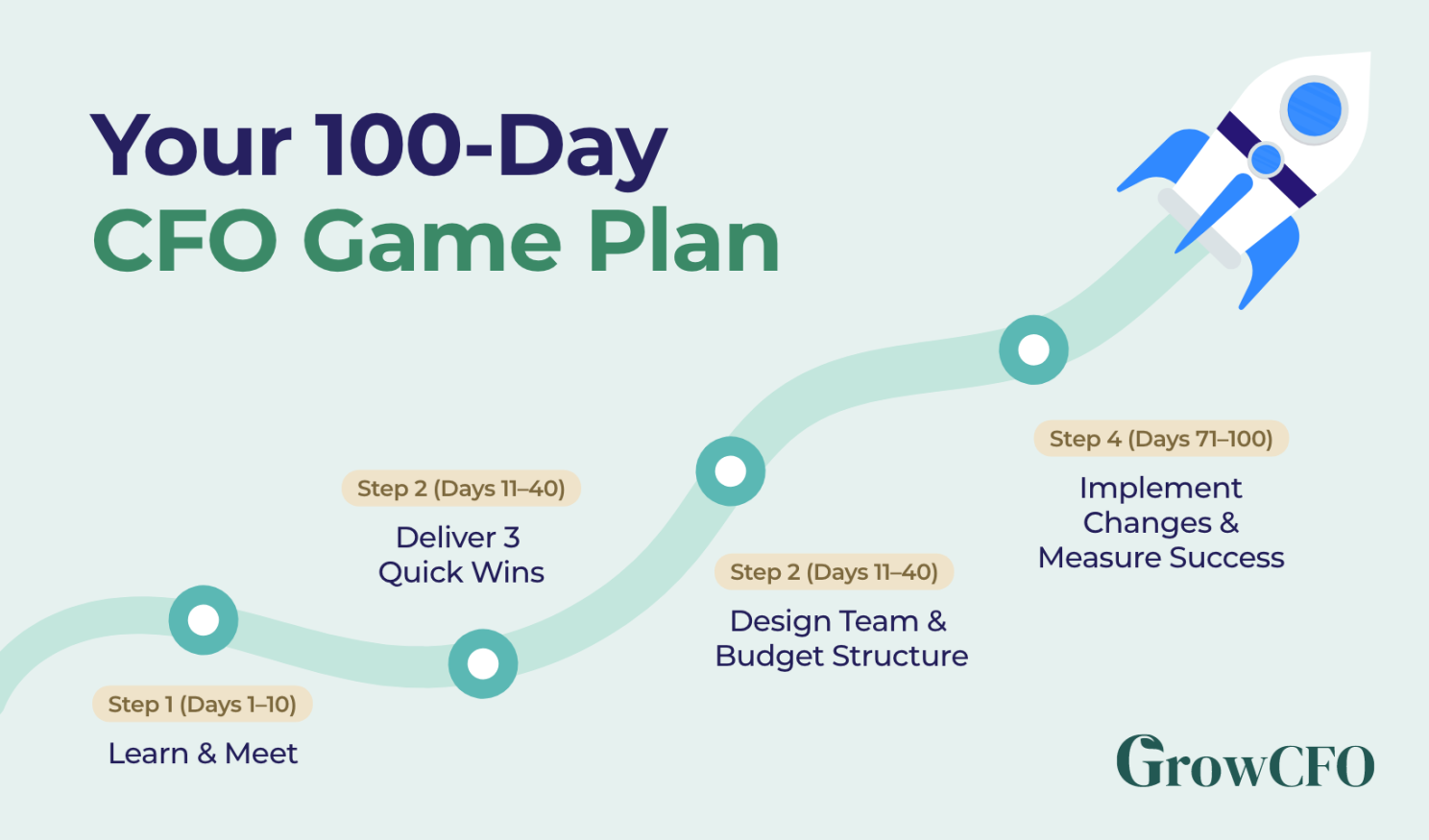
Write a simple one-page plan:
- Days 1–10: What needs to be learned and who needs to be met.
- Days 11–40: Three quick wins to deliver.
- Days 41–70: Team and budget structure priorities.
- Days 71–100: Bigger operational or strategic changes and how success will be measured.
GrowCFO recently worked with a newly hired finance leader who initially did what many hardworking professionals do: double-checking reports, fixing spreadsheets, and correcting presentation details.
The work was accurate, but it did not change the trajectory of the business.
By week three, major hiring and cost decisions were already happening without that leader in the room, simply because existing habits remained unchanged.
Here’s what tipped the scales:
- A direct conversation with the CEO to clarify expectations and goals.
- A shift from status-update meetings to decision-focused conversations with leadership teams.
By day 30, that leader was no longer sitting quietly in important meetings. They were helping drive them with clear opinions, commercial thinking, and practical solutions.
That is what true leadership looks like: there’s no shame in asking for help.
For finance leaders looking to accelerate the jump into strategic, big-picture leadership, GrowCFO explores these challenges in depth during its free online Future CFO Preview Event.