Spend Management Has Outgrown Accounts Payable
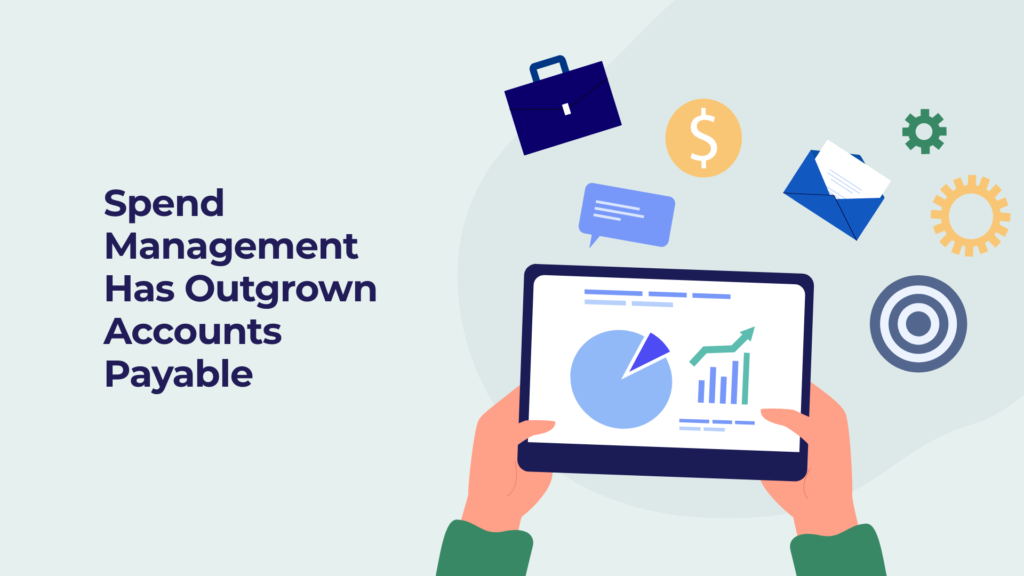
One of the central arguments in the latest GrowCFO Tech Innovation Report on Spend Management is that the CFO’s spend-management problem has moved well beyond accounts payable. AP automation still matters, and for many finance teams it remains one of the most practical places to start. But the bigger issue is now visibility and control across the full lifecycle of spend, from the moment money is requested or committed through to renewal, consumption, payment and value review.
That is why GrowCFO has also chosen spend and cost management as the theme for its next Tech Showcase on 24 June. The report sets out the broader shifts taking place in the market. The showcase gives finance leaders the opportunity to see how the technology is developing in practice. Taken together, they reflect a simple but important point: the next spend-management problem probably will not arrive neatly labelled as an invoice.
It may arrive as a renewal notice for a tool nobody in finance realised had become business-critical. It may arrive as an AI usage charge buried inside a vendor platform, a cloud consumption bill that has crept upwards month by month, or a departmental subscription bought on a card because someone needed to solve a problem quickly.
That is why spend management can no longer be treated as another name for accounts payable automation. AP still matters enormously, but the CFO’s spend-management agenda has become much bigger than processing invoices efficiently. The real challenge is no longer just how quickly finance can capture, approve and pay an invoice. It is whether the organisation has enough visibility and control before the money has already been committed.
The old AP problem has not gone away
Many finance teams still have too much manual AP work. Invoices still arrive in inboxes, approvals still get chased by email, coding still depends on local knowledge, supplier queries still consume time, and audit trails are often weaker than they should be. Duplicate payments, late approvals, poor visibility and last-minute month-end surprises remain very real problems for growing businesses.
So AP automation remains highly relevant. For many organisations, it is still one of the clearest and most practical finance transformation business cases. Faster invoice capture, better approval routing, stronger controls and cleaner posting into the accounting system can make an immediate difference. But AP automation only solves part of the problem, because it helps finance control what has already become an invoice. The bigger challenge now is controlling spend before it gets that far.
Spend has become more fragmented
The “CFO Stance” Script: How To Speak With Confidence Without Bluffing
The CFO is no longer dealing only with traditional supplier invoices, purchase orders and payment runs. More cost is now sitting in places that are harder to see, harder to govern and harder to forecast. SaaS subscriptions, usage-based software platforms, AI add-ons, embedded vendor features, cloud and infrastructure consumption, auto-renewing contracts and tools bought outside finance or procurement all create a different kind of visibility problem.
In the old world, finance might have seen the spend when a purchase order was raised, when an invoice arrived, or when a supplier was set up. In the new world, spend can be committed long before finance has a meaningful opportunity to challenge it. Sometimes the first clear signal is a renewal notice. Sometimes it is a usage bill. Sometimes it is a budget overspend. Sometimes it is the uncomfortable realisation that three different teams are paying for tools that do broadly the same thing.
By then, finance is no longer managing the decision. It is managing the consequence.
Finance needs to move control upstream
Traditional AP reporting tells finance what has already happened. Modern spend management needs to tell finance what is about to happen, what has already been committed, what is being consumed, and what is quietly turning into waste. That requires a much broader view of the spend lifecycle, from initial request and approval through to supplier onboarding, commitment, consumption, invoicing, payment, renewal and value review.
This changes the questions finance needs to ask. What has been requested? What has been approved? What has been committed? What is being consumed? What is due to renew? Who owns the spend? What value is it delivering? Where is cost leaking? These are very different questions from simply asking whether an invoice has been approved for payment.
The old question was, “What did we spend?” The new question is, “What have we committed to, who is consuming it, what value are we getting, and where is cost leaking?” That is a much harder question to answer, but it is becoming one of the most important questions for CFOs who want to protect margin, improve forecasting and make sure growth is not accompanied by unnecessary complexity.
P.S. Before the next executive meeting, write a one-sentence recommendation, list the two assumptions underneath it, and define the trigger that would change your mind. Bring that to the meeting, not another spreadsheet tab.
This is not just a software issue
It is tempting to turn every finance problem into a system selection problem, but modern spend management is not simply about buying a better AP tool, procurement platform or expense system. It is an operating model issue. Finance, procurement, AP, IT and business users all need to work around a shared framework for controlling spend.
That framework needs to define who can commit spend, who approves new suppliers, who monitors renewals, who owns SaaS usage, who challenges duplicated tools, who reviews AI-related costs and who validates whether spend is actually delivering value. Without that shared framework, the organisation ends up with fragmented control. AP controls invoices, procurement controls formal supplier onboarding, IT sees some of the technology estate, budget holders manage their own departmental priorities, and finance tries to make sense of the numbers after the event.
That model is increasingly fragile, especially when more spend is subscription-based, usage-based, decentralised or embedded inside technology platforms. The more fragmented the buying environment becomes, the more important it is for finance to create a connected view of spend, rather than relying on controls that only operate once an invoice has arrived.
The CFO’s role is changing
This is why spend management is becoming a more strategic finance leadership discipline. It is not just about stopping people spending money. It is about making sure the organisation understands what it is committing to, whether that commitment supports business priorities, and whether the cost continues to make sense over time.
That distinction matters. The best finance teams are not trying to become the “department of no”. They are trying to help the business make better decisions earlier. They are asking whether the organisation is buying the right things, using what it already has, duplicating capability, challenging renewals before they roll over, governing AI and SaaS costs properly, monitoring usage-based costs before they scale, and linking spend to measurable business value.
That is a very different conversation from simply asking whether an invoice has been approved. It moves finance from transaction processing into business partnering, risk management and performance improvement. It also gives the CFO a more active role in shaping how the organisation scales without allowing cost, complexity and vendor sprawl to build up unnoticed.
AP automation is still important — but it is no longer enough
None of this reduces the importance of AP automation. In fact, AP automation is often the starting point for better spend management because it creates cleaner data, stronger controls and better visibility over supplier activity. But CFOs should avoid seeing AP automation as the whole answer.
The real opportunity is to connect AP into a broader spend-management lifecycle: request, approval, supplier onboarding, commitment, consumption, invoice, payment, renewal, reporting and value review. That is where spend management becomes more powerful. Not because finance processes spend faster, although that helps, but because the organisation gains earlier visibility, stronger control and better insight into where money is being committed and whether it is delivering the intended return.
Spend management has outgrown accounts payable
Spend management is no longer just about paying suppliers efficiently. It is about controlling commitments, consumption, technology-enabled work and measurable business value across the organisation. That includes AP, but it also includes SaaS subscriptions, AI usage, cloud costs, supplier renewals, embedded software features, departmental buying and the many small commitments that become significant when nobody is watching them properly.
For CFOs, this is now a leadership issue. The finance function needs to help the organisation see spend earlier, challenge it more intelligently and connect it more clearly to value. If an organisation is still managing spend mainly at the point the invoice arrives, then the bigger opportunity is not just to automate AP. It is to rethink how spend is governed before the commitment has already been made.
The full argument can be explored in the GrowCFO Tech Innovation Report on Spend Management, which looks at how technology is changing the way finance teams manage AP automation, procurement, expenses, SaaS, AI costs and wider cost governance. And for those who want to see how this is developing in practice, the GrowCFO Cost Management Tech Showcase on 24 June will explore the platforms and approaches helping finance teams improve visibility, control and value across the spend lifecycle.