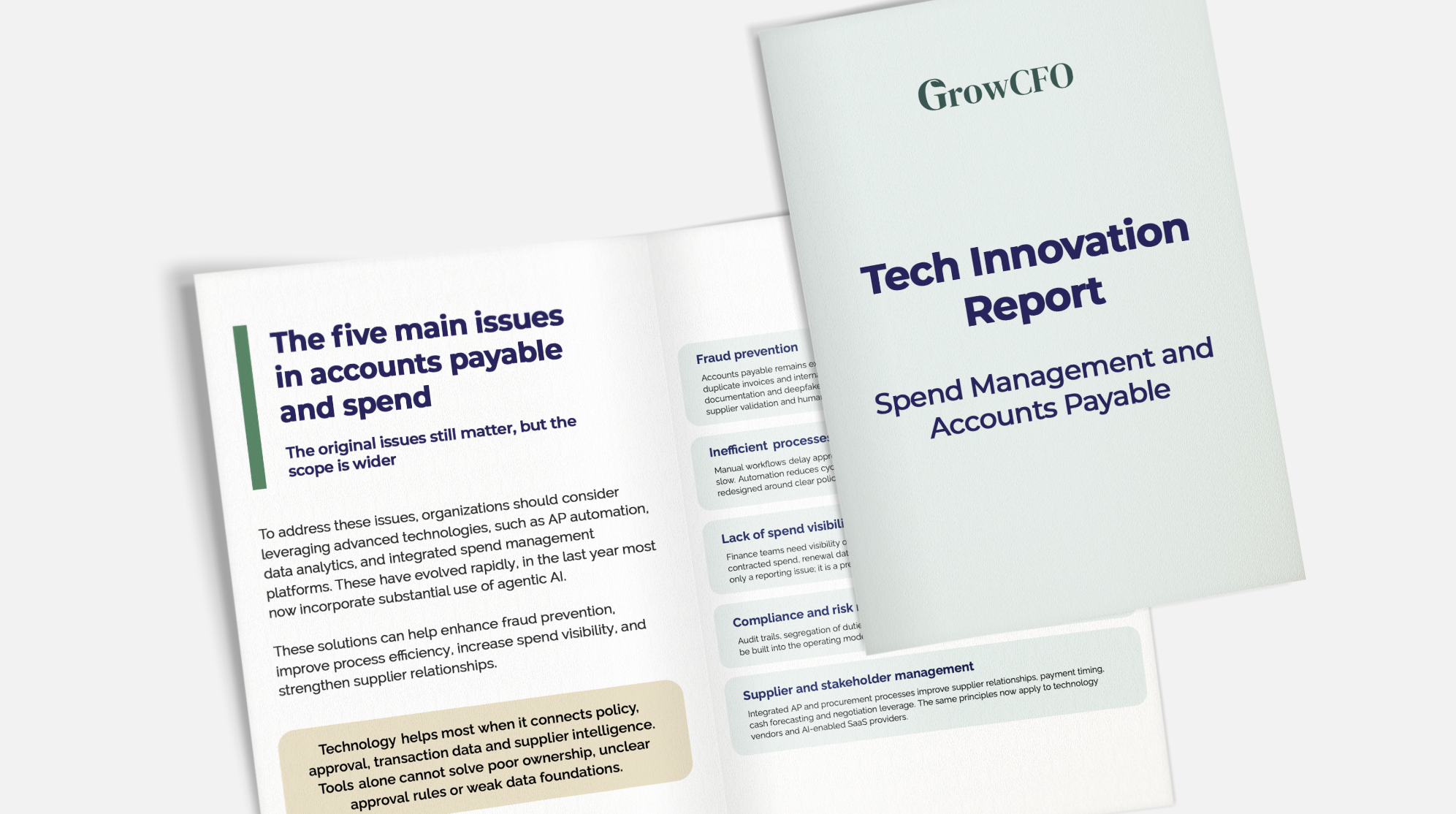
Spend Management and Accounts Payable
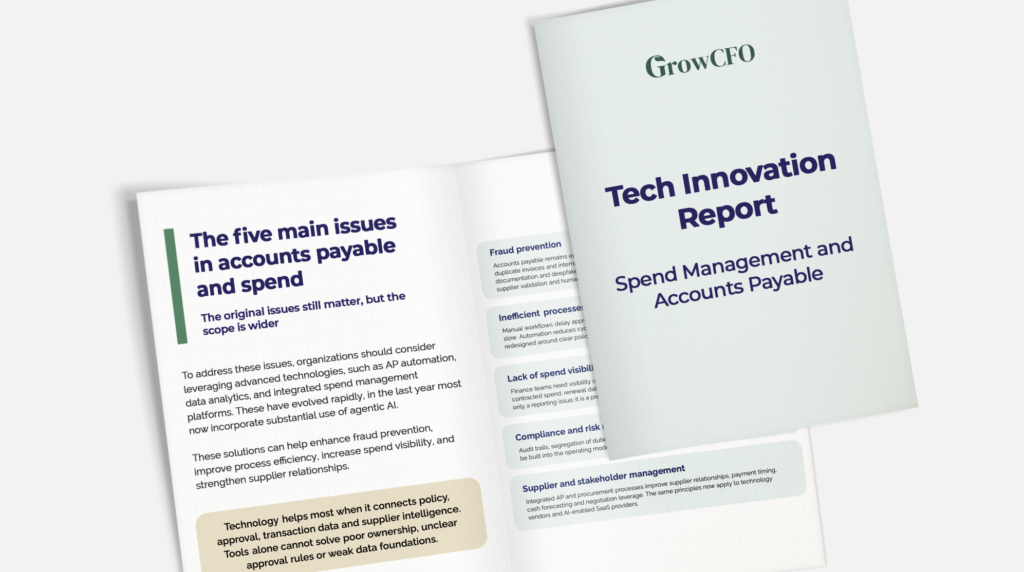
For years, the business case for spend management focused on efficiency.
Reduce invoice processing costs. Speed up approvals. Improve supplier payments. Strengthen audit trails.
Those benefits still matter, but the challenge facing finance leaders today is much broader.
Organizations are managing an increasing number of software subscriptions, AI-powered tools, cloud services, and usage-based platforms. As spend becomes more fragmented, finance teams need visibility not only into what has been spent, but what has been committed, consumed, and renewed.
The question is no longer: “Did we pay the invoice correctly?” It is: “Do we have control over spend before the invoice arrives?”
Why Traditional Spend Controls Are No Longer Enough
Many finance teams still struggle with familiar accounts payable challenges:
- Manual invoice processing
- Delayed approvals
- Duplicate payments
- Poor supplier visibility
- Weak audit trails
But a growing share of spend now sits outside traditional procurement and accounts payable processes.
Departments can purchase software directly. AI tools can generate usage-based costs. Vendors can introduce premium AI features that increase spend without a formal procurement review.
As a result, finance teams often discover costs after commitments have already been made.
This creates a new spend-control challenge that extends far beyond accounts payable.
The Rise of SaaS and AI Spend
Two of the fastest-growing challenges for finance teams are SaaS sprawl and AI cost leakage.
SaaS Sprawl
Many organizations struggle with:
- Duplicate applications
- Unused licenses
- Automatic renewals
- Weak ownership
- Limited visibility into usage
AI Cost Leakage
AI introduces a different challenge.
Costs can be influenced by:
- User adoption
- Model selection
- API consumption
- Data volumes
- Embedded AI features
- Automated workflows
Without strong governance, these costs can grow quickly while remaining difficult to forecast or allocate.
Finance leaders increasingly need to treat SaaS and AI spending as controllable business investments rather than technology expenses.
The Shift from Automation to Governance
Accounts payable automation remains one of the strongest starting points for finance transformation.
Modern platforms can automate:
- Invoice capture
- Matching and approvals
- Exception management
- Payment controls
- Supplier communications
The benefits are clear: lower processing costs, faster cycle times, fewer errors, and stronger auditability. However, the next generation of spend management goes further.
Leading organizations are connecting:
- Procurement
- Accounts payable
- Contract management
- SaaS management
- Spend analytics
- AI governance
The objective is not simply to process transactions faster, it is to create visibility and control before money leaves the business.
Where AI Is Delivering Value
AI is already creating measurable benefits across spend management and procurement.
Invoice Exception Resolution
AI can analyze supporting documents, identify discrepancies, and recommend next steps.
Supplier Risk Monitoring
AI can monitor supplier changes, unusual payment activity, and policy breaches.
Spend Analytics
AI can identify duplicate vendors, fragmented spending, and cost-saving opportunities across large data sets.
SaaS Renewal Reviews
AI can combine usage data, contract terms, and renewal dates to support more informed purchasing decisions.
The most successful use cases focus on reducing manual effort while maintaining strong governance and human oversight.
Why FinOps Is Becoming a CFO Priority
Historically, finance teams managed software costs through annual budgets and vendor contracts. AI changes that model.
Many AI-related costs are:
- Usage-based
- Variable
- Distributed across departments
- Difficult to forecast
This is why FinOps is becoming increasingly important. FinOps applies financial discipline to digital consumption by helping organizations:
- Track usage
- Allocate costs
- Forecast future spending
- Optimize consumption
- Link costs to business value
For finance leaders, FinOps provides a framework for governing AI and cloud spend before costs become a budget problem.
What CFOs Should Focus On Next
The most successful organizations are not trying to automate everything at once. Instead, they focus on a small number of high-impact priorities.
1. Improve Spend Visibility
Understand contracted, committed, invoiced, and consumed spend.
2. Strengthen Governance
Create clear ownership for AI tools, SaaS platforms, and supplier relationships.
3. Prioritize High-Value Workflows
Target areas with significant manual effort, high transaction volumes, or measurable spend leakage.
4. Measure Business Outcomes
Track cost savings, efficiency gains, risk reduction, and adoption.
The goal is not more technology, it is better financial control.
What This Means for Finance Leaders
Spend management is becoming a broader finance operating discipline.
Finance leaders are increasingly responsible for:
- Supplier spend
- Technology spend
- SaaS governance
- AI consumption
- Procurement intelligence
- Cloud cost management
The organizations that gain the most value will be those that combine automation with visibility, governance, and accountability.
The future of spend management is not simply about paying suppliers efficiently, it is about controlling commitments, consumption, and value creation across the organization.
Visibility first. Control second. Optimization third.
That is the foundation of modern spend management.