Why Most Finance Leaders Stall Before CFO
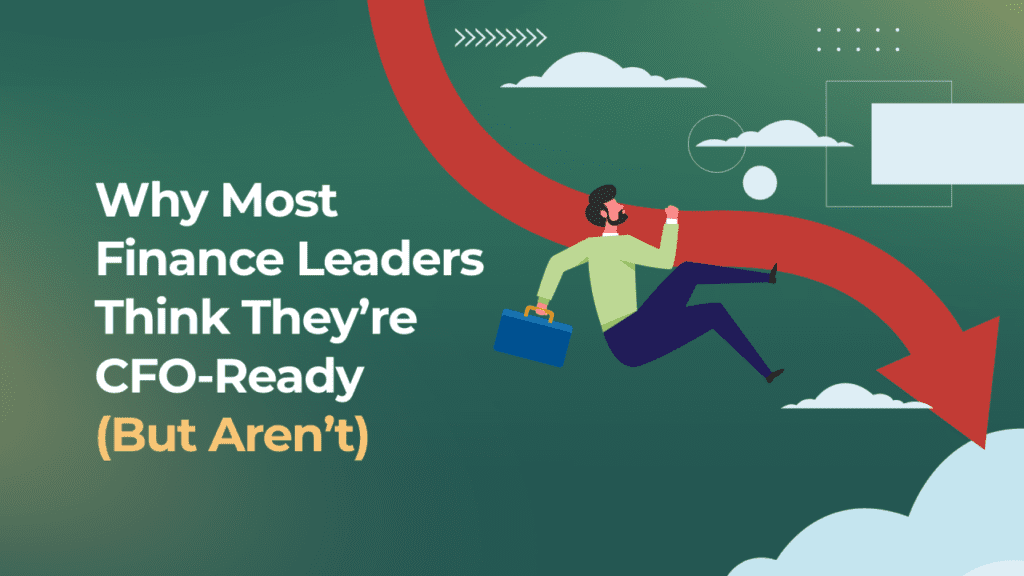
Most finance leaders think one more year of experience will get them to CFO.
In reality, it’s often the reason they stall.
At Finance Director level, success comes from accuracy, control, and delivery. At CFO level, the game changes: judgment, influence, and decision ownership take over.
GrowCFO has seen capable, high-performing finance leaders miss the step up—not because they lacked skill, but because they were still operating in the wrong mode.
Experience builds credibility. But CFO readiness is about how you think, decide, and lead under pressure.
What actually changes at CFO level
The shift is subtle, but decisive.
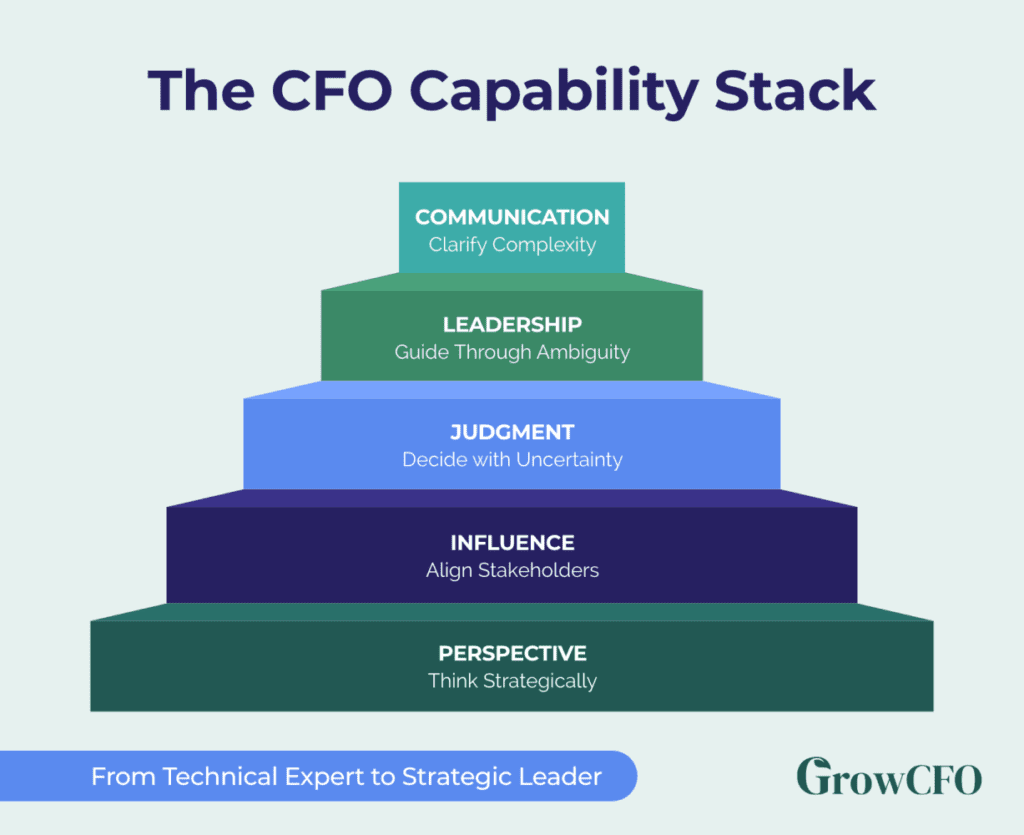
At senior levels, technical expertise becomes the baseline.
What differentiates you is your ability to:
- Perspective → Move from reporting numbers to shaping decisions
- Influence → Align stakeholders without relying on authority
- Judgment → Make calls with incomplete, imperfect data
- Leadership → Guide teams through ambiguity, not just process
- Communication → Translate complexity into clear direction
Bottom line: You’re no longer responsible for financial output. You’re responsible for business outcomes.
The real reason people don’t make CFO
Most leaders misdiagnose the gap.
They focus on:
- More experience
- Better technical depth
- Another qualification
But the real constraint is decision exposure.
If you’re not regularly making high-stakes decisions, you’re not building CFO readiness—no matter how strong your output is.
The CFO Readiness Scorecard (use this)
Instead of asking “Am I experienced enough?”, use this:
Score yourself (0–5 on each)
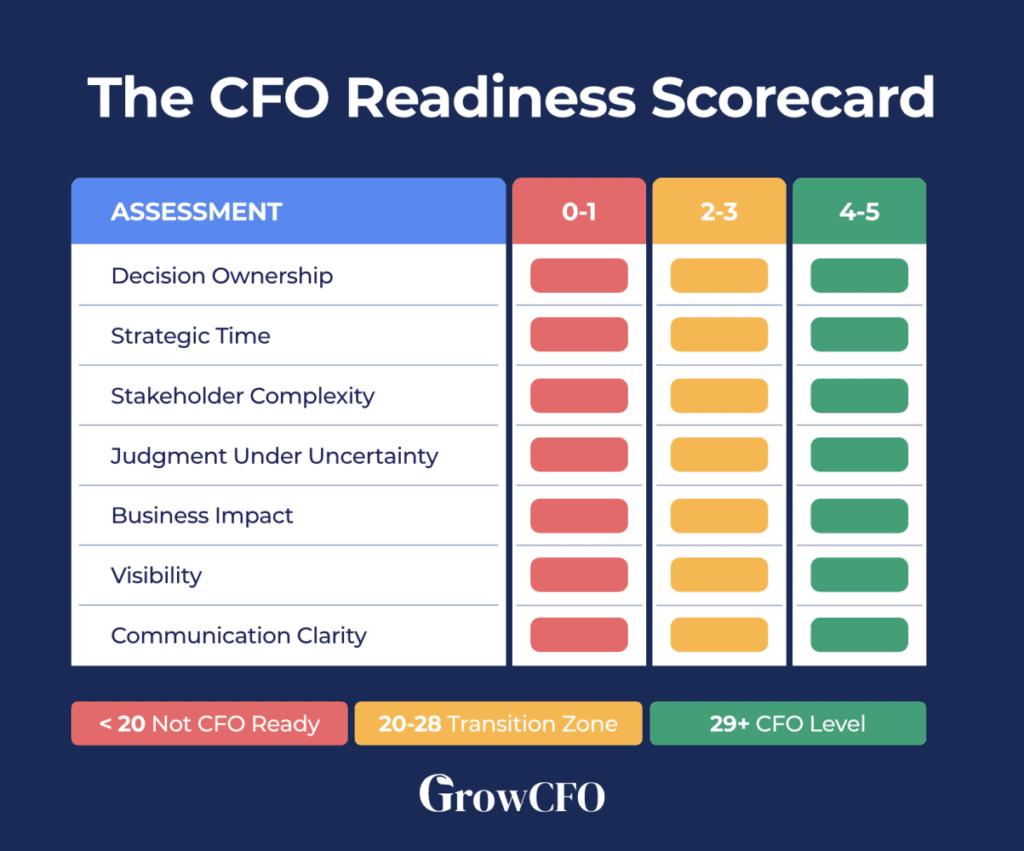
- Decision ownership How often do you make decisions vs support them?
- Time allocation % of your week spent on strategic vs operational work?
- Stakeholder complexity Do you influence board/exec-level conversations?
- Judgment under uncertainty Can you decide without full data?
- Business impact Are your actions tied to revenue, cash, or value creation?
- Visibility Are you known for shaping direction—not just reporting?
- Communication clarity Can you simplify complexity under pressure?
How to interpret:
- <20 → Strong operator, not yet CFO-ready
- 20–28 → Transition phase (most FDs here)
- 29+ → Operating at CFO level (title lagging capability)
How To Assess If You’re Actually CFO-Ready
Most people assess readiness based on experience. That is the wrong starting point.
Here is a more accurate way to evaluate yourself:
- Define the real job The CFO is not responsible for finance output. They are responsible for business outcomes, capital allocation, and strategic direction.
- Benchmark yourself against modern CFO expectations Do you have the skills of today’s CFOs? Benchmark your strengths and uncover your gaps using the CFO Competency Assessment. This gives you an objective view of where you stand, beyond job title or years of experience.
- Map your current responsibilities List what you actually do weekly. How much of it is operational versus strategic?
- Identify your decision exposure Are you making decisions, or preparing information for others to decide? This is one of the biggest gaps.
- Evaluate stakeholder complexity Have you handled board-level conversations? Have you influenced senior leadership without relying on data alone?
- Stress-test your judgment Can you make a call when the data is incomplete? Or do you wait for certainty?
- Assess communication under pressure Can you simplify complexity into a clear direction? Especially when stakes are high?
- Build a repeatable development plan You do not “become ready” by waiting. You become ready by deliberately practicing these skills.
Where most people get stuck
A pattern GrowCFO sees repeatedly:
- Strong technically
- Trusted internally
- Reliable delivery
But:
- Not in the final decision room
- Not owning outcomes
- Not shaping strategy
That’s the trap.
You become indispensable in execution …but invisible in leadership.
Try this
Look at your last 10 working days.
Write down:
- The key decisions made
- Whether you owned or supported them
👉 If fewer than 30% are owned decisions, that’s your gap.
Not skills. Not experience. Exposure.
If this gap feels familiar, that’s exactly what GrowCFO breaks down in the Future CFO Preview Event—how CFOs assess readiness, identify blind spots, and deliberately build decision exposure.