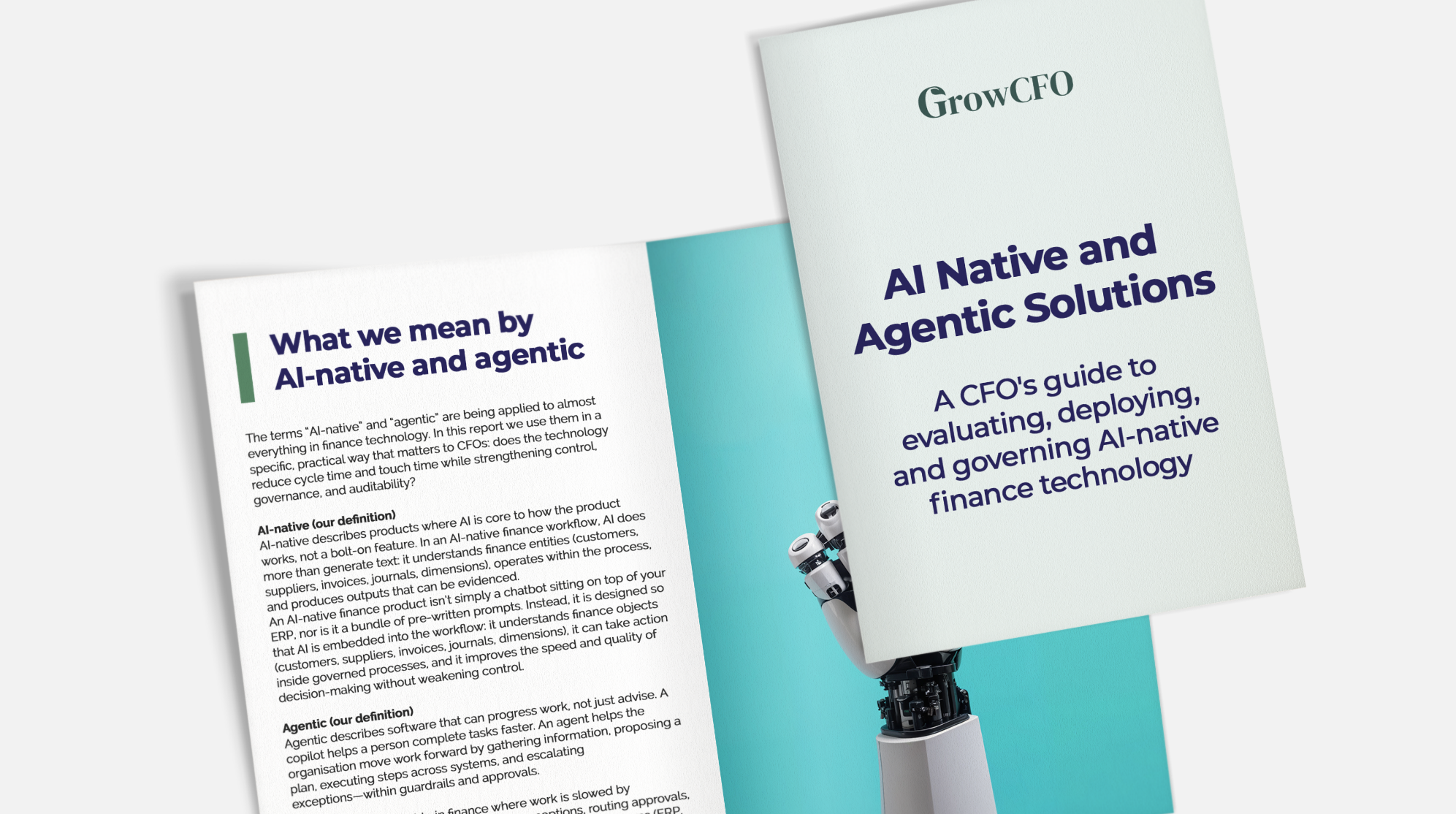
AI Native and Agentic Solutions
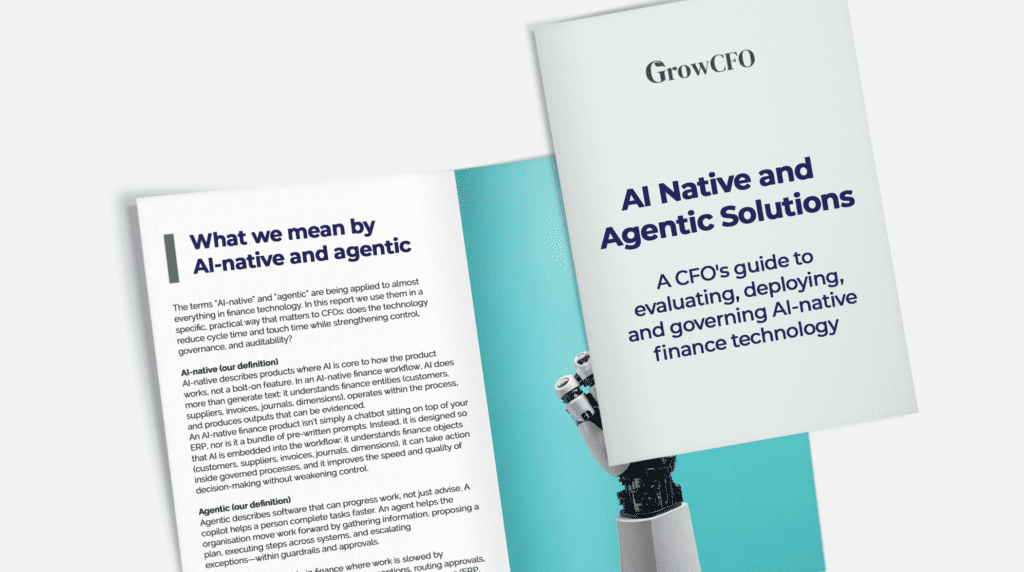
How CFOs Deploy AI Without Losing Control
AI is everywhere in finance technology, but very little of it is truly finance-ready.
Terms like AI-native and agentic are being applied to almost every product category. For CFOs, the real question isn’t whether a tool can generate insights. It’s whether it can reduce cycle time and touch time while strengthening control, governance, and auditability.
This GrowCFO Tech Innovation Report provides a practical framework to help finance leaders evaluate AI solutions safely, identify high-impact use cases, and deploy AI without compromising accountability.
Why CFOs Need a Clear Definition of AI-Native
Not all AI is created equal. Most finance teams encounter three patterns:
- AI-enabled: Traditional tools with AI features layered on top. Helpful, but rarely transformational.
- AI-assisted: AI recommends actions, but humans execute every step.
- AI-native: AI is embedded into the workflow itself, understanding finance entities, operating inside approvals, and producing auditable outputs.
A simple test:
If you removed the AI, would most of the product’s value disappear?
If not, it’s likely AI-enabled, not AI-native.
In this report, AI-native means AI that:
- Understands finance objects (invoices, journals, dimensions, entities)
- Works inside governed workflows
- Handles exceptions intelligently
- Creates traceable evidence by default
Agentic Workflows: Automating Progress, Not Accountability
A copilot helps a person complete work faster.
An agent helps the organization move work forward.
Agentic software can:
- Gather context across ERP, CRM, billing, banking
- Propose next steps with rationale
- Execute within guardrails and approvals
- Escalate exceptions
- Leave a clear audit trail
It is most powerful where finance slows down, chasing evidence, routing approvals, reconciling mismatches, and coordinating across systems.
Where AI-Native Delivers Immediate Value
Across the GrowCFO community, the same operational pressure points appear repeatedly. AI-native tools deliver the most value where finance teams are slowed down by manual effort, fragmented data, and exception handling.
Record to Report
Finance teams often experience:
- A slow close caused by scattered supporting evidence
- Manual reconciliations that consume skilled time
- Late exceptions that create audit pressure
High-impact AI use cases include:
- Automated reconciliation matching with anomaly detection
- Close orchestration agents that track tasks and dependencies
- Audit pack preparation with structured evidence capture
KPIs: Close days, reconciliation break rate, manual journals, audit queries
Planning & Forecasting
Common friction points include:
- Slow forecast refresh cycles
- Inconsistent or poorly defined business drivers
- Time-intensive narrative reporting for stakeholders
AI applications include:
- Driver drift detection to flag material changes
- Scenario modeling across defined assumptions
- Automated first-draft commentary supported by drill-through evidence
KPIs: Forecast cycle time, forecast accuracy, stakeholder responsiveness
Accounts Payable and Receivable
Finance leaders report challenges such as:
- Manual coding and frequent invoice exceptions
- Slow cash application processes
- Revenue leakage and unresolved disputes
AI applications include:
- Invoice coding suggestions with confidence scoring
- Intelligent cash application matching
- Collections prioritization based on risk and value
KPIs: DSO, cost per invoice, exception rate, leakage percentage, cycle time
What This Means for Your Tech Stack
AI-native finance tools are evolving quickly. CFOs face three practical options:
Augment – Add AI layers to existing systems for fast, low-disruption pilots.
Buy – Adopt specialist AI-native solutions for high-volume workflows.
Build – Develop tailored capabilities where differentiation demands it.
Most CFO teams succeed by sequencing these decisions:
Start small. Prove value. Strengthen controls. Then scale.
The objective is not “more AI.” It’s measurable finance improvement — delivered with governance intact.
Controls, Risk & Governance: The Non-Negotiable Foundation
AI can draft, classify, match and prioritize. It cannot own accountability.
Finance-ready AI must include:
- Clear workflow ownership
- Explicit approval gates
- Immutable audit trails
- Traceability to underlying transactions
AI adoption succeeds when governance is designed in from day one. The goal isn’t to slow innovation, it’s to ensure speed is matched by confidence.
A Practical Next Step for CFOs
If you’re exploring AI in close, forecasting, AP, AR, treasury, or controls, the key is to start with:
- A clearly defined pilot (30–90 days)
- Measurable KPIs
- Human-in-the-loop guardrails
- Strong evidence capture
The full report outlines:
- A CFO decision framework
- The 90-day deployment blueprint
- A finance-ready AI checklist for vendor demos
- Key evaluation criteria across the tech stack
AI in finance isn’t about replacing judgement.
It’s about reducing friction so judgement can be applied where it matters most.
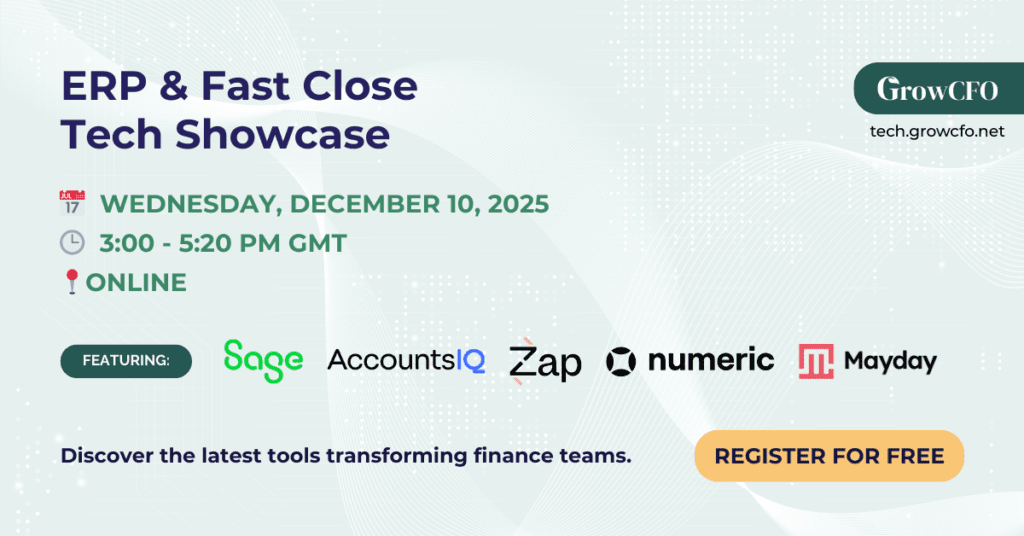
Or join our upcoming AI-Native Finance Tech Showcase onWednesday | 25 March 2026 | 3:00 PM GMT